Author: Mia

  • Old Vases and Large Cans Needed for Newton North HS Prom. Please Donate here…

    Old Vases and Large Cans Needed for Newton North HS Prom. Please Donate here…

    28 oz and 35 oz empty cans needed!

    Hi Neighbors,

    I’m helping the Newton North senior class officers with the floral centerpieces for their senior prom, which is June 4.

    To save money, we are using  clean metal cans or old vases to hold the floral arrangements. The metal cans we are looking for are 28 oz to 35 oz. cans, the kind you often buy for crushed tomatoes.  They are 4 inches in diameter, or about 12.5 inches around, and about 4 to 5 inches high.  Wrapped in tissue
    paper, no one will be the wiser, and we can spend more money on flowers.  (See the photo below for one example)

    If you have old vases of similar size, we would love to have those too. We need at least 50, so if you have even one, that would certainly help!

    Old Florist Vases also welcome!

    Please check your recycling before you put it out tonight, especially if you just made a big pot of soup or pasta sauce!

    Feel free to drop any donations at my house, 38 Holman in Auburndale (off Day Street which is off Commonwealth Avenue and/or Washington Blvd). I’ll leave a paper bag or a box on my front stoop.

    Thanks and best regards,

    Marian

  • 4th Grade Science Study Guide: Energy, Light and Sound UPDATED2

    4th Grade Science Study Guide: Energy, Light and Sound UPDATED2

    Energy Sound and Light, 4th grade science,

    What is energy? This is from U. S. Energy Information Administration.

    Energy Is the Ability To Do Work

    Energy comes in different forms:

    • Heat (thermal)
    • Light (radiant)
    • Motion (kinetic)
    • Electrical
    • Chemical
    • Nuclear energy
    • Gravitational

    Energy is in everything. We use energy for everything we do, from making a jump shot to baking cookies to sending astronauts into space.

    There are two types of energy:

    • Stored (potential) energy
    • Working (kinetic) energy
    There is a great iPad/iPhone/iPod Touch app to design roller coasters that shows this.
    Coaster Physics. Design your own roller coaster and watch the potential energy convert to kinetic energy as you ride your roller coaster. $.99. My first grader plays this all the time! Click on icon to view at iTunes.

    For example, the food you eat contains chemical energy, and your body stores this energy until you use it when you work or play.

    Energy Sources Can be Categorized As Renewable or Nonrenewable

    When we use electricity in our home, the electrical power was probably generated by burning coal, by a nuclear reaction, or by a hydroelectric plant at a dam. Therefore, coal, nuclear and hydro are called energy sources. When we fill up a gas tank, the source might be petroleum or ethanol made by growing and processing corn.

    Energy sources are divided into two groups — renewable (an energy source that can be easily replenished) and nonrenewable (an energy source that we are using up and cannot recreate). Renewable and nonrenewable energy sources can be used to produce secondary energy sources including electricity and hydrogen.

    Renewable Energy

    Renewable energy sources include:

    • Solar energy from the sun, which can be turned into electricity and heat
    • Wind
    • Geothermal energy from heat inside the Earth
    • Biomass from plants, which includes firewood from trees, ethanol from corn, and biodiesel from vegetable oil
    • Hydropower from hydroturbines at a dam

    Nonrenewable Energy

    We get most of our energy from nonrenewable energy sources, which include the fossil fuels — oil, natural gas, and coal. They’re called fossil fuels because they were formed over millions and millions of years by the action of heat from the Earth’s core and pressure from rock and soil on the remains (or “fossils”) of dead plants and creatures like microscopic diatoms. Another nonrenewable energy source is the element uranium, whose atoms we split (through a process called nuclear fission) to create heat and ultimately electricity.

    We use renewable and nonrenewable energy sources to generate the electricity we need for our homes, businesses, schools, and factories. Electricity “energizes” our computers, lights, refrigerators, washing machines, and air conditioners, to name only a few uses.

    Most of the gasoline used in our cars and motorcycles and the diesel fuel used in our trucks are made from petroleum oil, a nonrenewable resource. Natural gas, used to heat homes, dry clothes, and cook food, is nonrenewable. The propane that fuels our outdoor grills is made from oil and natural gas, both nonrenewable.

    The chart above shows what energy sources the United States used in 2010. Nonrenewable energy sources accounted for 92% of all energy used in the Nation. Biomass, the largest renewable source, accounted for over half of all renewable energy and 4% of total energy consumption.

    ————————-

     What is light?

    This is from Optical Resources.

    What is light?
    It’s a kind of energy called “electromagnetic (EM) radiation” (but this kind of radiation is not harmful, except for an occasional sunburn). There are other kinds of EM radiation too (radio waves, microwaves, x-rays, etc.), but light is the part WE can see, the part that makes the rainbow.

    How does light travel?
    FAST and STRAIGHT.

    How FAST?
    About 186,000 miles per second [300,000 kilometers per second], so light from the sun takes about 8 minutes to go 93 million miles [149 million kilometers] to earth. Does this seem SLOW? Well, if you could DRIVE to the sun at 60 mph [100 kph], it would take you 177 years to get there! In one second, light can go around the earth 7 times!

    How STRAIGHT?
    Perfectly straight, until something bends it. The straight paths of light are called LIGHT RAYS.

    How are shadows formed?

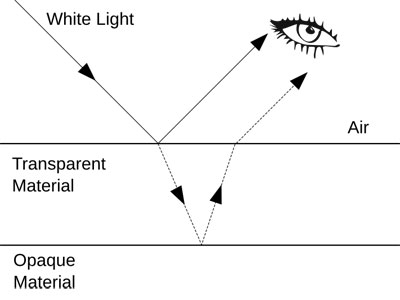
    When light strikes an object, some light reflects (based on the colour of the object). when there is an obstacle in the way of the light, and it cannot pass, there is no light to reflect, and thus a shadow is formed.
    A SHADOW IS FORMED WHEN LIGHT SHINES AT AN OPAQUE OBJECT BLOCKING THE LIGHT RAY CAUSING A SHADOW BECAUSE LIGHT ONLY GOES IN A STRAIGHT LINE.

    Vocabulary

    These are the terms for the 4th Grade Test

    translucent versus transparent versus opaque:

    a transparent object is one that lets light pass through   (clear window)

    a translucent object lets some light go through but not all  (bathroom window)

    opaque: light can not go through it. Impenetrable by light; neither transparent nor translucent.

    an opaque object lets no light pass through  (a table)

    absorption: The term absorption refers to the physical process of absorbing light. The process in which incident radiated energy is retained without reflection or transmission on passing through a medium. For example, light can not go through an object that is opaque because that object absorbs the light.

    reflection versus refraction:

    The phenomenon of a light beam rebounding after hitting a surface is called reflection. To put it simply, the mirror images are what are called reflection generally. However in the case of refraction, these angles are not the same. Different media participate in refraction, thus making this angle unequal. Reflection is found in mirrors while lenses use refraction.

    light energy: energy transferred by radiation, especially by an electromagnetic wave. It’s a kind of energy called “electromagnetic (EM) radiation” (but this kind of radiation is not harmful, except for an occasional sunburn). There are other kinds of EM radiation too (radio waves, microwaves, x-rays, etc.), but light is the part WE can see, the part that makes the rainbow.

    When a light wave with a single frequency strikes an object, a number of things could happen. The light wave could be absorbed by the object, in which case its energy is converted to heat. The light wave could be reflected by the object. And the light wave could be transmitted by the object.

    sound energy: Sound is a type of energy made by vibrations. When any object vibrates, it causes movement in the air particles. These particles bump into the particles close to them, which makes them vibrate too causing them to bump into more air particles. This movement, called sound waves, keeps going until they run out of energy. If your ear is within range of the vibrations, you hear the sound.

    pitch: pitch is the frequency at which an object vibrates to create a sound. A tuning fork, for example, that vibrates 440 times a second will produce a perfect “A” note. It is these predetermined levels of frequencies that pitch is categorized into the twelve chromatic musical tones.

    vibrate:   move back and forth rapidly.

    Did you hear that sound? It was made by air vibrating. The same is true for sounds made by musical instruments. The difference between NOISE and MUSIC is that musical sounds are organized into patterns that have pitch and rhythm. Noise is just random, disorganized sounds. Sounds are made and travel in the same way whether they are musical sounds or noise.

    A musical sound is called a tone, and is produced by air vibrating a certain number of times per second. These vibrations are called waves.

    ———————–

    What is sound? This is from National Institute on Deafness and other Communication Disorders.

    What is sound? Sound is a form of energy, just like electricity and light. Sound is made when air molecules vibrate and move in a pattern called waves, or sound waves. Think of when you clap your hands, or when you slam the car door shut. That action produces soundwaves, which travel to your ears and then to your brain, which says, “I recognize that sound.”

    This is from Science Kids at Home.

    What is Sound?

    Sound is a type of energy made by vibrations. When any object vibrates, it causes movement in the air particles. These particles bump into the particles close to them, which makes them vibrate too causing them to bump into more air particles. This movement, called sound waves, keeps going until they run out of energy. If your ear is within range of the vibrations, you hear the sound.

    Picture a stone thrown into a still body of water. The rings of waves expand indefinitely. The same is true with sound. Irregular repeating sound waves create noise, while regular repeating waves produce musical notes.

    When the vibrations are fast, you hear a high note. When the vibrations are slow, it creates a low note. The sound waves in the diagram show the different frequencies for high and low notes.

    Low frequency noteslow frequency sound wave High frequency noteshight frequency sound wave

    How do Wind Instruments make sound?

    In wind instruments, like the flute and trumpet, vibrating air makes the sound. The air particles move back and forth creating sound waves. Blowing across a flute’s blow hole sets up Slinky-like waves in the tube. In the clarinet, a vibrating reed (a thin piece of wood set in the mouthpiece) gets the waves started. Different pitches are played by pressing keys that open or close holes in the tube making the air column inside the tube longer or shorter. Longer air columns produce lower pitches.

    How do String Instruments make sound?

    Stringed instruments are played by pressing the fingers down on the strings. This pressure changes the strings’ length, causing them to vibrate at different frequencies and making different sounds. Shortening a string makes it sound higher. Strings produce different sounds depending on their thickness.

    ————————

    Forms of Energy. This is from U. S. Energy Information Administration

    Forms of Energy Basics

    What Is Energy?

    Energy makes change possible. We use it to do things for us. It moves cars along the road and boats over the water. It bakes a cake in the oven and keeps ice frozen in the freezer. It plays our favorite songs on the radio and lights our homes. Energy is needed for our bodies to grow and it allows our minds to think.

    Scientists define energy as the ability to do work. Modern civilization is possible because we have learned how to change energy from one form to another and use it to do work for us and to live more comfortably.

    Forms of Energy

    Energy is found in different forms including light, heat, chemical, and motion. There are many forms of energy, but they can all be put into two categories: potential and kinetic.

    Potential Energy

    Potential energy is stored energy and the energy of position — gravitational energy. There are several forms of potential energy.

    Kinetic Energy

    Kinetic energy is motion — of waves, electrons, atoms, molecules, substances, and objects.

    Chemical Energy is energy stored in the bonds of atoms and molecules. Batteries, biomass, petroleum, natural gas, and coal are examples of stored chemical energy. Chemical energy is converted to thermal energy when we burn wood in a fireplace or burn gasoline in a car’s engine.Mechanical Energy is energy stored in objects by tension. Compressed springs and stretched rubber bands are examples of stored mechanical energy.Nuclear Energy is energy stored in the nucleus of an atom — the energy that holds the nucleus together. Very large amounts of energy can be released when the nuclei are combined or split apart. Nuclear power plants split the nuclei of uranium atoms in a process called fission. The sun combines the nuclei of hydrogen atoms in a process called fusion.Gravitational Energy is energy stored in an object’s height. The higher and heavier the object, the more gravitational energy is stored. When you ride a bicycle down a steep hill and pick up speed, the gravitational energy is being converted to motion energy. Hydropower is another example of gravitational energy, where the dam “piles” up water from a river into a reservoir. Radiant Energy is electromagnetic energy that travels in transverse waves. Radiant energy includes visible light, x-rays, gamma rays and radio waves. Light is one type of radiant energy. Sunshine is radiant energy, which provides the fuel and warmth that make life on Earth possible.Thermal Energy, or heat, is the vibration and movement of the atoms and molecules within substances. As an object is heated up, its atoms and molecules move and collide faster. Geothermal energy is the thermal energy in the Earth.Motion Energy is energy stored in the movement of objects. The faster they move, the more energyis stored. It takes energy to get an object moving, and energy is released when an object slows down. Wind is an example of motion energy. A dramatic example of motion is a car crash, when the car comes to a total stop and releases all its motion energy at once in an uncontrolled instant.Sound is the movement of energy through substances in longitudinal (compression/rarefaction) waves. Sound is produced when a force causes an object or substance to vibrate — the energy is transferred through the substance in a wave. Typically, the energy in sound is far less than other forms of energy.Electrical Energy is delivered by tiny charged particles called electrons, typically moving through a wire. Lightning is an example of electrical energy in nature, so powerful that it is not confined to a wire.


  • The Way to Maine and 3 Book GIVEAWAY

    The Way to Maine and 3 Book GIVEAWAY

    Maine is great for family vacations and weekends, it is only a short drive away and we always have great food and a wonderful time. This site groups together almost thirty Maine camps, is easy to navigate and full of helpful information like camp readiness tips and how to choose a camp. Here is my most recent find from a soccer sideline conversation:

    Maine Camp Experience. Maine camps set a high standard with an enviable combination of their natural beauty, strong traditions and values, and variety activities. Best of all – MCE is offering two camp tuition giveaways – yes, camp tuition!

    The first drawing is May 15 – so you still have time to enter to win. Here is the scoop:

    Maine Camp Experience, the organization of premier camps for children in the best state for summer camp, is putting its money where its mantra is. It will award two tuition giveaways of up to $5,000 each for use at member camps in the 2012 or 2013 seasons. Families with prospective or returning campers can log on to www.mainecampexperience.com/wintuition to enter, as well as find a variety of tools to help them learn about Maine sleep-away camps.

    Drawings are May 15 and Sept. 15

    Go here to enter to win one of the three books (Michael Thompson’s Homesick and Happy)and go here to get more info on the $5000 camp tuition from Maine Camp Experience.

    Disclaimer: I received no compensation for this post, opinions, as always are my own. I did receive three copies of the book, Homesick and Happy for this giveaway.

  • First Annual CakeWalk at Millennium Park benefiting Homeless Kids

    First Annual CakeWalk at Millennium Park benefiting Homeless Kids

    cakewalk
    On May 20, 2012, as part of our year-long 10th Birthday celebration, Birthday Wishes will sponsor its first annual CakeWalk at Millennium Park in West Roxbury.
    This event has been percolating here for several years, and we are very excited to see it come to fruition as we celebrate 10 years of bringing birthday parties to homeless children.
    CakeWalk represents the core values and philosophy of Birthday Wishes:  a family-friendly, grassroots event that provides an opportunity for kids to help kids.
    The CakeWalk is a non-competitive, fun walk and fundraiser which includes a morning full of great kids’ activities, surprise guests, and refreshments including a giant birthday cake for all to enjoy.  Face-painting, kite flying, and children’s yoga are just a few of the attractions for kids of all ages.
    Most importantly, “CakeWalkers” will be coming together to support the work of Birthday Wishes.  Anyone who has volunteered at a Birthday Wishes party has seen the impact that this experience has on the birthday children, their families, and even the other shelter residents.  The simple act of providing joy and making a child feel loved and special, especially on their birthday,  brings immeasurable benefits to children tramatized by homelessness.
    In 2012, we are on target to serve over 14,000 homeless children in Massachusetts alone.  Please take a few moments to register for CakeWalk and help ensure that every homeless child in Massachusetts is celebrated on their birthday.
    Walkers can participate as individuals, or form a team with family, friends, or groups. It’s easy to create individual fundraising pages, set a fundraising goal, and invite family, friends and colleagues to help you reach your goal.
  • The Discovery Museums: Free Evening for Children with Autism

    The Discovery Museums: Free Evening for Children with Autism

    Discovery Museum Acton,

    “Especially for Me” is part of the Museums’ Open Door Connections program to expand museum access 

    Funding provided by CVS, Nypro, DCU for Kids, Acton-Boxborough Regional High School’s Youth in Philanthropy Club, and the Local Cultural Councils of Acton, Carlisle, Chelmsford, Dracut, Framingham, Harvard, Hudson, Lawrence, Leominster, Lexington, Littleton, Natick, Waltham, Wayland, Westford and Weston, with in-kind support from Not Your Average Joe’s

    The Discovery Museums are pleased to announce that the next event in the 2012 “Especially for Me” series, for families with children on the Autism spectrum, will be held on May 19.  Families can explore both the Children’s Discovery Museum and the Science Discovery Museum for free with pre-registration.

    “Especially for Me” is part of the Museums’ Open Door Connections program to provide opportunities for those who face a variety of barriers—financial, geographic, developmental, or cultural—to experience the Museums. Other free events in the “Especially for Me” series include free events for families with children with hearing loss.

    What:                    ESPECIALLY FOR ME! A Free Evening at The Discovery Museums for Families with Children on the Autism Spectrum

    Where:                  The Discovery Museum, 177 Main Street, Acton, MA 01720 978-264-4200  www.discoverymuseums.org

    When:                   Saturday, May 19, 5:30-8:30 PM at both the Children’s Discovery Museum and Science Discovery Museum

    Other info:           Pizza and lemonade will be provided, courtesy of Not Your Average Joe’s.

    To Register:        Pre-registration is required. Please visit http://tinyurl.com/EspeciallyforMe2012-4 to register.


  • Moms’ Book Club Picks and Skype Author Visits to Share

    Moms’ Book Club Picks and Skype Author Visits to Share

    I run my moms’ book club which is mostly neighbors and the most challenging part of the job is to pick the books so I thought I’d share our picks in case you are looking for a good read, be it a light summer read or more serious stuff. We alternate. One month “beach read.” Next month “Booker Prize-ish.”

    Our book club is all about socializing so reading the book before the meeting is actually optional. I am the worst culprit since I prefer children’s lit so it’s been interesting to see what books the ladies actually read. It seems to me that we are most enthusiastic about memoirs.

    Here’s what we’ve been reading. How about you? What are you reading? What do you recommend?

    p.s. A list of Newton Authors.

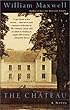
    The Chateau by William Maxwell

    It is 1948 and a young American couple arrive in France for a holiday, full of anticipation and enthusiasm. But the countryside and people are war-battered, and their reception at the Chateau Beaumesnil is not all the open-hearted Americans could wish for.

    This book was praised for “beautiful writing” and “and interesting take on post WWII France”. A good portion of our book club read the entire book despite it being quite long with a very small font which made it seem intimidatingly dense.
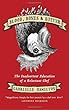
    Blood, Bones and Butter: The Inadvertent Education of a Reluctant Chef by Gabrielle Hamilton

    Before Gabrielle Hamilton opened her acclaimed New York restaurant Prune, she spent twenty fierce, hard-living years trying to find purpose and meaning in her life. Above all she sought family, particularly the thrill and the magnificence of the one from her childhood that, in her adult years, eluded her. Hamilton’s ease and comfort in a kitchen were instilled in her at an early age when her parents hosted grand parties, often for more than one hundred friends and neighbors. The smells of spit-roasted lamb, apple wood smoke, and rosemary garlic marinade became as necessary to her as her own skin.

    Blood, Bones & Butter follows an unconventional journey through the many kitchens Hamilton has inhabited through the years: the rural kitchen of her childhood, where her adored mother stood over the six-burner with an oily wooden spoon in hand; the kitchens of France, Greece, and Turkey, where she was often fed by complete strangers and learned the essence of hospitality; the soulless catering factories that helped pay the rent; Hamilton’s own kitchen at Prune, with its many unexpected challenges; and the kitchen of her Italian mother-in-law, who serves as the link between Hamilton’s idyllic past and her own future family—the result of a difficult and prickly marriage that nonetheless yields rich and lasting dividends.

    Blood, Bones & Butter is an unflinching and lyrical work. Gabrielle Hamilton’s story is told with uncommon honesty, grit, humor, and passion. By turns epic and intimate, it marks the debut of a tremendous literary talent.

    “I wanted the lettuce and eggs at room temperature . . . the butter-and-sugar sandwiches we ate after school for snack . . . the marrow bones my mother made us eat as kids that I grew to crave as an adult. . . . There would be no ‘conceptual’ or ‘intellectual’ food, just the salty, sweet, starchy, brothy, crispy things that one craves when one is actually hungry. In ecstatic farewell to my years of corporate catering, we would never serve anything but a martini in a martini glass. Preferably gin.”

    Chef Owner of lauded East Village restaurant Prune comes out with her first book. Even Anthony Bourdain would say that she’s the best chef writer around. It’s unflinchingly honest which is how our book club likes its memoirs and has the same “overcoming-traumatic-dysfunction-childhood-caused-by-divorce” story that we loved about Andre Dubus III’s memoir.
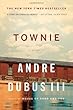
    Townie: A Memoir by Andre Dubus III

    Won Book of the Year Adult Non-Fiction—2012 Indie Choice Awards
    Amazon Best Book of the Month February 2011

    “Dubus relives, absent self-pity or blame, a life shaped by bouts of violence and flurries of tenderness.”—Vanity Fair

    After their parents divorced in the 1970s, Andre Dubus III and his three siblings grew up with their overworked mother in a depressed Massachusetts mill town saturated with drugs and everyday violence. Nearby, his father, an eminent author, taught on a college campus and took the kids out on Sundays. The clash between town and gown, between the hard drinking, drugging, and fighting of “townies” and the ambitions of students debating books and ideas, couldn’t have been more stark. In this unforgettable memoir, acclaimed novelist Dubus shows us how he escaped the cycle of violence and found empathy in channeling the stories of others—bridging, in the process, the rift between his father and himself.

    It was difficult for our book club to separate how much they like the author versus his book. Both get high marks. He was the Book and Author guest for the Newton Free Library fundraiser and is often accessible through other charity book events. Those that met him rave about his down-to-earth humbleness and note how handsome he is. (Sorry, he’s married!). His memoir was also widely enjoyed.
    Snowdrops by Andrew Miller

    SHORTLISTED for the 2011 Man Booker Prize for Fiction

    A riveting story of erotic obsession, self-deception and moral free-fall, set in post-communist Moscow.
    Nick Platt is a lawyer working in Moscow in the early 2000s–a city of hedonism and desperation, magical hideaways and debauched nightclubs, kindness and corruption. Nick doesn’t ask too many questions about the shady deals he works on: he’s too busy enjoying the exotic, sinful nightlife. On a sultry day in September, Nick rescues two willowy sisters, Masha and Katya, from a would-be purse snatcher, and soon the three of them are cruising Moscow’s seamy glamour spots. As winter descends on the decadent city, Nick falls for the seductive Masha, but soon finds he is falling away from himself–and at the centre of a tale of deception and betrayal, in a place where dark secrets, and long hidden corpses, come to light when the deep snows finally thaw.

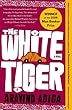
    This is our next pick so we won’t meet on it until June. The person who picked this book also selected The White Tiger: A Novel by Aravind Adiga which won the Booker Prize which gives insight into modern day India’s dirty politics while wrapping a riveting story around class lines.

    Snowdrops promises a peek into modern day mafia Russia. We are all pretty excited about this book.
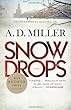
    Author Visits

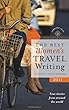
    We had Carol Reichert of Newton visit our book club for her piece in Best Women Travel’s Writing 2011. She has a new piece in the 2012 edition so we are looking forward to booking her. If you would like to have her for your book club, please leave a comment. I will pass it on to her for you.

    Since publishing A Woman’s World in 1995, Travelers’ Tales has been the recognized leader in women’s travel literature, and with the launch of the annual series The Best Travel Writing in 2004, the obvious next step was an annual collection of the best women’s travel writing of the year. This title is the seventh in an annual series—The Best Women’s Travel Writing—that presents inspiring and uplifting adventures from women who have traveled to the ends of the earth to discover new places, peoples, and facets of themselves. The common threads are a woman’s perspective and compelling storytelling to make the reader laugh, weep, wish she were there, or be glad she wasn’t.

    In The Best Women’s Travel Writing 2011, readers

    Have lunch with a mobster in Japan and drinks with an IRA member in Ireland
    Learn the secrets of flamenco in Spain and the magic of samba in Brazil ** Carol Reichert’s Piece
    Deliver a trophy for best testicles in a small town in rural Serbia
    Fall in love while riding a camel through the Syrian Desert
    Ski a first descent of over 5,000 feet in Northern India
    Discover the joy of getting naked in South Korea
    Leave it all behind to slop pigs on a farm in Ecuador…and much more.
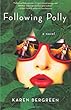
    Following Polly: A Novel by Karen Bergreen

    Would you call Alice Teakle a stalker?  Or just someone with an, um, healthy obsession with golden girl Polly Linley Dawson?  No one much notices Alice: not her boss, not the neighbors, not even her Mother.

    Besides, everyone follows Polly: her business selling high-end lingerie you can imagine only her elegant self wearing, her all-over-the-social-pages marriage to movie director Humphrey Dawson, her chic looks, her wardrobe. Alice just follows her a little more….closely.

    And when she loses her job and starts to follow Polly Dawson one Manhattan autumn afternoon, Alice stumbles on the object of her attention sprawled dead on the floor of a boutique.  Alice is forced to become truly beneath anyone’s notice. Invisible, in fact. Because she’s accused of murder.

    But can another obsession help save Alice with the fallout?  Charlie is Alice’s longtime unattainable crush.  He might be able to help her out of the mess she’s in…in return for a favor or two, that is.    And how will Alice find out if Charlie is really the man Alice thinks he is?

    We all enjoyed Karen Bergreen’s first novel. She is coming out with a new book, Perfect is Overrated, this summer and we are going to try to book her for a Skype author visit. Interested? I can ask on your behalf. She’s a friend from college. Expect her books to be funny. Before she had kids, she was a stand up comedian.
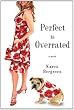
    Perfect is Overrated

    What the best cure for post-partum depression? After years of barely moving, Kate springs back to life when the mothers-youlove- to-hate in her daughter’s preschool begin to turn up dead. Murder as a cure for sadness? Sounds evil, but it’s not. In Perfect Is Overrated, stand-up comedian and author of Following Polly Karen Bergreen presents a lovable heroine who is so at sea she’s still not sure whether what she suffers has to do with the birth of her little girl or with the fact that her handsome hunk of a detective husband doesn’t live with her anymore. She might fall back in love, she might find a killer, but she sure won’t be spending all day in bed anymore.
    Sometimes I Feel Like a Nut: Essays and Observations by Jill Kargman

    Demonstrating Woody Allen’s magical math equation, comedy = tragedy + time, a sensational collection of witty essays about life, love, hate, kids, work, school, and more from the author of The Ex-Mrs. Hedgefund and Arm Candy

    Jill Kargman is a mother, wife, and writer living the life in New York City . . . a life that includes camping out in a one-bedroom apartment with some unfortunate (and furry) roommates, battling the Momzillas of Manhattan, and coming to terms with her desire for gay men. In this entertaining collection of observations, Kargman offers her unique, wickedly funny perspective as she zips around Manhattan with three kids in tow.

    Kargman tackles issues big and small with sharp wit and laugh-out-loud humor: her love of the smell of gasoline, her new names for nail polishes, her adventures in New York City real estate, and her fear of mimes, clowns, and other haunting things. Whether it’s surviving a family road trip or why she can’t stand Cirque du So Lame, living with a mommy vagina the size of the Holland Tunnel or surviving the hell that was her first job out of college, Kargman’s nutty self triumphs, thanks to a wonderfully wise outlook and sense of fun that makes the best of everything that gets thrown her way. And if that’s not enough, Kargman illustrates her reflections with doodles that capture her refreshing voice.

    We read her light and funny memoir but had a hard time keeping up. We are just not hip enough for the NYC 30 something Mommy lingo. Still, it was a fun read. It just made us feel old.
    The Rock Star in Seat 3A: A Novel by Jill Kargman

    It’s Hazel’s thirtieth birthday and she has everything she’s ever wanted: a kickass job, a dream apartment in New York City, and the perfect boyfriend—who’s just days away from proposing. Hazel thinks she’s happy but isn’t quite ready to settle down. So when her most far-fetched fantasy enters the realm of the possible, shouldn’t she drop everything to see it through?

    The morning after her birthday, Hazel boards a flight to L.A. only to get the surprise of her life. When she’s bumped up to first class, extra legroom and free drinks are absolutely the last things on her mind when she catches sight of her seatmate: her all-time biggest celebrity crush, rock star Finn Schiller! Only the night before she’d confessed her infatuation with the gorgeous musician, and her boyfriend joked that she had a free pass if she ever met him. Hazel can’t believe fate has actually thrown them together.

    Even more unbelievable is that during the flight they genuinely connect. Finn likes her uncensored cursing and wicked sense of humor, and that she’s unlike all of his groupies; Hazel likes his killer looks, ripped physique, and soulful music. But what started as a fantasy quickly becomes a real attraction, and after a dream date and taste of the rock-star life with Finn in L.A., Hazel is forced to examine the track her life is on. Indulging in a passionate affair with a rock star seems crazy—but could she ever forgive herself if she walked away from her wildest dream coming true? And is her wildest dream the stuff that happiness is made of?

    A lively novel about a down-to-earth New York City girl who suddenly finds herself in a rock ‘n’ roll Cinderella fantasy, The Rock Star in Seat 3A is seasoned with Jill Kargman’s signature wit and hilarious dialogue. This is a fairy-tale romance with a twist.

    One of our book club members is friends with Jill Kargman so we are hoping to Skype her in for an author visit. Are you interested too? Just leave a comment and we’ll try to hook you up.
    The Good Mother : A Novel by Sue Miller

    Anna is a divorcee, a piano teacher, and a devoted mother. She was brought up in a family which valued achievement and self-discipline above almost everything else, but what Anna has always longed for is to be more passionate and expressive, both in her music and in her life, than she seems capable of being. Then she falls in love with Leo, an artist, and in many ways the kind of wild, impulsive person Anna has always wanted to be. Their relationship is intensely sexual and it is this, ultimately, which threatens to destroy all that Anna holds dear.

    We are booking Sue Miller for an author visit this fall and we are REALLY excited. Her book was an Oprah pick. Our connection to Sue Miller is a friend-of-a-friend so we lack clout to get her for you. Still, if you want her for your book club, leave a comment and we can pass that along. She does live near Newton …
     To purchase any book at Amazon, please click on image of book.

  • Temple Beth Shalom of Needham Presents Fiddler on the Roof at Rashii School

    Temple Beth Shalom of Needham Presents Fiddler on the Roof at Rashii School

     Fiddle on the Roof, Newton Temple Shalom

    Direction:  Cynde Hartman

    Musical Direction:  Don Boroson        Choreography:  Nicole Spirito

    Saturday, May 12, 2012 at 8:00 p.m.

    Sunday, May 13, 2012 at 2:00 p.m. and 7:00 p.m.

    Seating is reserved:  Order tickets early for best seats!


    Rashi School Auditorium

    8000 Great Meadow Road, Dedham, MA 02026
    Tickets are available by mail using this order form or by e-mail through:  http://www.ticketstage.com/TBSN

    Please mail this ticket order form and a check payable to Temple Beth Shalom to Ken Willis, 10 Holland Terrace, Needham, MA 02492.  Tickets will be confirmed by e-mail.  The e-mail confirmation will be your ticket for the show.  Please print the e-mail and bring it with you to the performance. No other ticket will be mailed to you. If you do not have an e-mail address, please include a stamped, self-addressed envelope and tickets will be mailed to you.  For questions only (no ticket orders): Call Ken at (781) 449-4315 or e-mail: tbsfiddler@gmail.com.
    Performance Date & Time Number of tickets at $20.00 each Amount of Order
    Saturday, May 12:  8:00 p.m.
    Sunday, May 13:  2:00 p.m.
    Sunday, May 13:  7:00 p.m.


  • Cappella Clausura’s Spring Concert: Outside The Walls

    Cappella Clausura’s Spring Concert: Outside The Walls

    Cappella’s music has recently been described by the Boston Globe as “personal and inviting, extravagant and intimate…eavesdrop on paradise.”
    Concert Dates/Locations:
    Saturday, May 12, 8PM, Parish of the Messiah, 1900 Commonwealth Av., Newton
    Saturday, May 19, at 8PM, University Lutheran, 66 Winthrop St., Cambridge
    Sunday, May 20, 4PM, First Church in Jamaica Plain, 6 Eliot St., Jamaica Plain
    Contact:
    Director Amelia LeClair 617-964-6609 or manager@clausura.org
    Tickets:
    $15 – $25. Purchase online at www.clausura.org or at the door
    Cappella Clausura presents Outside the Walls, an imagining of an Italian 17th century salon-like performance where the music, religious in nature, would have been sung by men and women in mixed company, yet written by nuns behind the convent walls.
    Originally written for female voices, to be sung within the cloister, this music was then arranged by the nuns for mixed voices, to appeal to a wider public. Although scholars don’t know how the music reached the major regional publishing houses of their day (many in Venice), they do know the music existed, was lost for centuries and only rediscovered through the writings of past music aficionados, music-lovers who traveled to hear these
    works and circulated their reviews.
    Clausura presents this passionate, harmonically rich choral music as it might have been performed by men and women or possibly men and boys in homes and churches. Director Amelia LeClair worked from original manuscipts and modern editions, arranging tempi, dynamics and instrumental parts from what she calls a
    spare, “blueprint” score. Beginning with a chant by 9th century Greek composer Kassia, the concert moves on to works by the mistresses of Early Baroque composition: Chiara Cozzolani, Raffaella Aleotti, Bianca Maria Meda, Lucretia Vizzana, Caterina Assandra, and Sulpitia Cesis. The works range from duets to 8-part pieces for voice and instruments: harpsichord, organ, gamba and theorbo.
    Cappella Clausura brings to light works written by women from the 8th century to the present day: twelve centuries of “new” music. While this ensemble of sopranos, altos, and period instruments performs music solely by women composers, and champions living composers, it concentrates on repertoire by women in the cloister – clausura – during the Italian baroque period. During this extraordinary time, women were allowed to express themselves spiritually and artistically, and to publish their own music. Clausura’s intention is to dispel the notion that there are not now nor have there ever been gifted women composers. History has been blind and
    deaf to these remarkable works; Cappella Clausura brings vision and voice to them.
  • Newton Events: Open Studio, Book & Author, BoxART

    Newton Events: Open Studio, Book & Author, BoxART

    Photo by Sharon Schindler

    Newton Open Studios What is happening in Newton? So many great things!

    ————

    On Friday, May 11, the Friends of the Newton Free Library’s Book and Author Luncheon with Dennis Lehane and Mitchell Zuckoff will speak at the newly renovated and quite lovely Boston Newton Marriott. Let’s put a table or two together! Join us!

    ————-

    Spring Open Studios: May 19 & 20, 2012, 11 am to 5 pm, free

    About NOS from the website:

    Newton Open Studios produces community arts events that bring together the artists and residents of Newton. It is a non-profit, funded by artists registration fees and donations from generous individuals and businesses, and in part by the Massachusetts Cultural Council as administered by the Newton Cultural Council. Newton Open Studios is an affiliate of Newton Community Pride.

    Here is a link to an interactive map (you can use it to find artists by media) and a printable map that will be available soon.

    We have some favorite artist friends who are participating and at our favorite coffee shop, L’Aroma, so that is a huge plus. A latte and some art? Sign me up! Photographer Sharon Schindler, Glass artist Suzi Wilder and Zeina Kahhale (ceramics and paint) will be a t location 11 (L’Aroma Cafe, 15 Spencer Street).

    —————

    More art in store for Newton residents! You know those really ugly utility boxes? Well, they won’t be unsightly for long – The NewtonSERVES BoxART Project is here! I am so excited – I noticed in Boston that artists had taken over the Utility boxes and thought it was a great idea – so did someone else!

    The goal of the NewtonSERVES BoxART project is to transform common, bland, green or gray utility boxes into visual, graphic and distinctive works of art. DPW, the Mayor’s Office for Cultural Affairs and Newton Community Pride have joined forces to collaborate on and to promote this pilot program.

    The NewtonSERVES BoxART Committee encourages artists (students as well as experienced artists) to share their creativity with the community. Vibrant public art creates an inviting environment and a sense of place. “We seek artwork that ‘enlarge, enliven and enlighten’ our experience of the world. The images chosen should offer some positive benefit – delight, fantasy, sociability, amenity, memories, healing emotion or a sense of joy… a sense of well-being.”

    The NewtonSERVES BoxART Committee is seeking proposals that are positive, original and creative and may (but are not required) to reflect the following:

    • The immediate environment creating a sense of place – Newton/village
    • The character and culture of Newton
    • The history of Newton

    Download the Request for Proposal (RFP)

    Download the Request for Brochure (PDF)

    More Information: email: NewtonSERVES@newtoncommunitypride.org or call 617 527-8283.


  • SOWA Art Walk May 6th: Check Out Kathryn Graven, Studio 319

    SOWA Art Walk May 6th: Check Out Kathryn Graven, Studio 319

    If you are going to the SOWA Art Walk this Sunday May 6th, from 11-6 p.m, please check out our friend Kathryn Graven. She is at Studio 319. Her site is here. You can view all these mixed media paintings at the show. Her work is Abstract Expressionist.