April 28 & 29 at Boston University. Anti-Bullying Dance Show by Cambridge Youth Dance Program. Buy tickets here.
2012 Spring Production, “Bridges. Not Walls.” 1 in 3 students is bullied in school. This is our story.
The Cambridge Youth Dance Program is a pre-professional dance training program developed and designed for dedicated dance students. Students are placed in one of five dance programs, each with its own set of core classes and minimum class requirements. The diverse curriculum offers intense training for the aspiring ballet dancer, as well as for dancers committed to musical theater studies.
Placement is based on the level of ability and dance focus. New and returning students are required to audition each year. During the first few weeks of classes, teachers may suggest a different level.
Performance opportunities include the annual year-end showcase at Boston University’s Dance Theater, as well as community concerts throughout the Cambridge and Boston areas. All of our company members receive tuition subsidies.
Established in 1889, the Waban Improvement Society is a 501(c)(3) non profit organization whose membership comprises all people who live and/or work in Waban, Massachusetts. The Society promotes any activity intended to improve Waban and fosters a sense of community for those who live and work here.
My kids study phases of the moon in 4th grade and both girls seemed to have problems with getting Waxing versus Waning straight in their heads despite a week of study. It could be that Waxing Crescent Moons look pretty similar to Waning Crescent Moons. I think Oreos would help with this!
I have a fun moon project that a Dad Friend first did for my oldest when she was in preschool. Clearly, it didn’t sink in but perhaps repetition is key. I’d use the mini-oreos myself for creating a cookie based phases of the moon chart. If you want to try it, it’s below.
Some kids might need a more detailed explanation and I found this from Moon Connection.
Other kids might like a video.
Diagram Explanation
The illustration may look a little complex at first, but it’s easy to explain.
Sunlight is shown coming in from the right. The earth, of course, is at the center of the diagram. The moon is shown at 8 key stages during its revolution around the earth. The moon phase name is shown alongside the image. The dotted line from the earth to the moon represents your line of sight when looking at the moon. To help you visualize how the moon would appear at that point in the cycle, you can look at the larger moon image. This means for the waning gibbous, third quarter, and waning crescent phases you have to mentally turn yourself upside down. When you do this, you’ll “see” that the illuminated portion is on your left, just as you see in the large image.
One important thing to notice is that exactly one half of the moon is always illuminated by the sun. Of course that is perfectly logical, but you need to visualize it in order to understand the phases. At certain times we see both the sunlit portion and the shadowed portion — and that creates the various moon phase shapes we are all familiar with. Also note that the shadowed part of the moon is invisible to the naked eye; in the diagram above, it is only shown for clarification purposes.
So the basic explanation is that the lunar phases are created by changing angles (relative positions) of the earth, the moon and the sun, as the moon orbits the earth.
If you’d like to examine the phases of the moon more closely, via computer software, you may be interested in this moon phases calendar software.
Moon Phases Simplified
It’s probably easiest to understand the moon cycle in this order: new moon and full moon, first quarter and third quarter, and the phases in between.
As shown in the above diagram, the new moon occurs when the moon is positioned between the earth and sun. The three objects are in approximate alignment (why “approximate” is explained below). The entire illuminated portion of the moon is on the back side of the moon, the half that we cannot see.
At a full moon, the earth, moon, and sun are in approximate alignment, just as the new moon, but the moon is on the opposite side of the earth, so the entire sunlit part of the moon is facing us. The shadowed portion is entirely hidden from view.
The first quarter and third quarter moons (both often called a “half moon“), happen when the moon is at a 90 degree angle with respect to the earth and sun. So we are seeing exactly half of the moon illuminated and half in shadow.
Once you understand those four key moon phases, the phases between should be fairly easy to visualize, as the illuminated portion gradually transitions between them.
An easy way to remember and understand those “between” lunar phase names is by breaking out and defining 4 words: crescent, gibbous, waxing, and waning. The word crescent refers to the phases where the moon is less that half illuminated. The word gibbous refers to phases where the moon is more than half illuminated. Waxing essentially means “growing” or expanding in illumination, and waning means “shrinking” or decreasing in illumination.
Thus you can simply combine the two words to create the phase name, as follows:
After the new moon, the sunlit portion is increasing, but less than half, so it is waxing crescent. After the first quarter, the sunlit portion is still increasing, but now it is more than half, so it is waxing gibbous. After the full moon (maximum illumination), the light continually decreases. So the waning gibbous phase occurs next. Following the third quarter is the waning crescent, which wanes until the light is completely gone — a new moon.
The Moon’s Orbit
You may have personally observed that the moon goes through a complete moon phases cycle in about one month. That’s true, but it’s not exactly one month. The synodic period or lunation is exactly 29.5305882 days. It’s the time required for the moon to move to the same position (same phase) as seen by an observer on earth. If you were to view the moon cycling the earth from outside our solar system (the viewpoint of the stars), the time required is 27.3217 days, roughly two days less. This figure is called the sidereal period or orbital period. Why is the synodic period different from the sidereal period? The short answer is because on earth, we are viewing the moon from a moving platform: during the moon cycle, the earth has moved approximately one month along its year-long orbit around the sun, altering our angle of view with respect to the moon, and thus altering the phase. The earth’s orbital direction is such that it lengthens the period for earthbound observers.
Although the synodic and sidereal periods are exact numbers, the moon phase can’t be precisely calculated by simple division of days because the moon’s motion (orbital speed and position) is affected and perturbed by various forces of different strengths. Hence, complex equations are used to determine the exact position and phase of the moon at any given point in time.
Also, looking at the diagram (and imagining it to scale), you may have wondered why, at a new moon, the moon doesn’t block the sun, and at a full moon, why the earth doesn’t block sunlight from reaching the moon. The reason is because the moon’s orbit about the earth is about 5 degrees off from the earth-sun orbital plane.
However, at special times during the year, the earth, moon, and sun do in fact “line up”. When the moon blocks the sun or a part of it, it’s called a solar eclipse, and it can only happen during the new moon phase. When the earth casts a shadow on the moon, it’s called a lunar eclipse, and can only happen during the full moon phase. Roughly 4 to 7 eclipses happen in any given year, but most of them minor or “partial” eclipses. Major lunar or solar eclipses are relatively uncommon.
Obviously, you’ll need a package of Oreos. Each child will need 8 Oreos, a butter knife and a paper plate. You may need more than 8 Oreos if they crack on you. You can use the mini Oreos too.
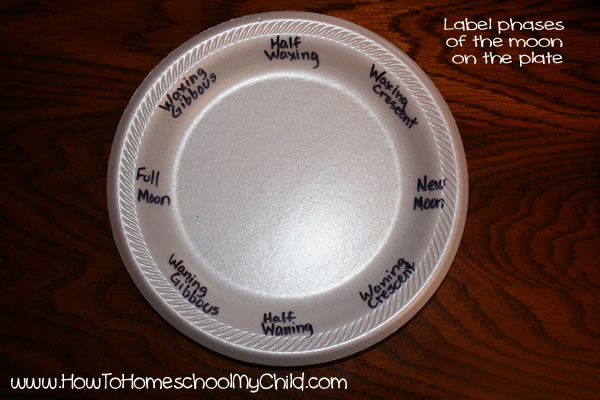
Depending on the age of your child, let them use a Sharpie to label each phase on the paper plate.
Be very careful as you separate your Oreos.
I had a few crack, so I had to eat them. Gosh!
The full moon & new moon are already done when you pull apart your Oreo.
It may take practice, but each child needs to scrape off the filling to create 2 crescent moons, 2 half moons and 2 ginnous moons.
Boston Center for Adult Education Continues Popular Celebrity Chef Kids Classes as Part of Its Bean City Kids Program!
WHAT: The same place that brought you classes like, “Mind Your Manners” with a noted tea sommelier and etiquette expert, the Boston Center for Adult Education’s (BCAE) Bean City Kids program is continuing the popular monthly series of interactive kids’ celebrity chef classes! Previous SOLD OUT celebrity chef classes have included reality TV show stars Andy Husbands of Tremont 647, Jason Santos of Blue Inc., and Jose Duarte of Taranta. On Monday, April 23rd, 2012 from 3:30PM to 4:30PM, kids will have the opportunity to tap into their creative side, working spoon to spoon with celebrity chef Joanne Chang of Flour Bakery andMyers and Chang inthe BCAE state-of-the-art-kitchen facilities.
The interactive cooking classes are hands-on, allowing kids to explore a whole new world of food appreciation while learning the tricks of the trade. They will take part in the cooking process from start to finish, building confidence and pride in the dishes they’ve created. At the end of the session the group will sit down with Chef Chang and enjoy the fruits of their labor.
Conveniently scheduled after school, the classes are perfect for children six to nine years of age! The themes & items prepared vary from month to month. All classes will involve two dishes that are both prepared by Chef Chang and students. All classes are nut-free. There MUST be a parent/caregiver present during class who is responsible for each child (no more than 3 kids per adult). Child’s registration fee covers caregiver.
Don’t miss this unique opportunity to sift and mix with Chef Joanne Chang!
WHEN: Monday, April 23rd, 2012; 3:30PM-4:30PM; 1 session
COST: $45 Members/Non-Members, $15 Materials
WHERE: Boston Center for Adult Education122 Arlington Street Boston, MA 02116.
RSVP: Registration is necessary. Please visit www.bcae.org or call the Boston Center for Adult Education at 617-267-4430 to sign up. There must be a parent/ caregiver present during class time. No more than 3 students per adult.
ADDITIONAL: Suitable for children 6-9 years of age. Completely nut-free. Children must be supervised by a parent or a caregiver.
My middle daughter is lucky to have Brian Rooney as her soccer coach so I can personally vouch for how wonderful he is! She also did Garden City Soccer Camp last summer and loved it. What is really great about Garden City is that the coaches are great role models. As high school varsity players, they talk about what it took for them to get good enough to play varsity soccer and they have wonderful rapport with the kids. My daughter also appreciated the pool! After the morning session and lunch, swimming was a welcome respite from the heat and then she was ready to go for another round of soccer in the afternoon.
Youth soccer camp, now in its 13th year, to be held at the fields at Newton North High School
Camp runs from 9 am to 4 pm during the week of July 2nd-6th (no camp on Wednesday, July 4th) and 9 am to 3 pm during the week of July 9th-13th
Designed for boys and girls ages 7-14
Opportunity to learn from some of the top coaches in the city
Directed by Brian Rooney – former Girls’ Varsity coach at Newton North and Boys’ Varsity coach at Newton North and Newton South
Counseling staff includes current and former players from Newton North and Newton South boys’ and girls’ soccer programs
Daily technical training (dribbling, passing, shooting, receiving, heading, etc.)
Daily tactical training (1v1 offense and defense, 2v1 offense and defense, etc.)
Individual and group skills competitions each day
Competitive scrimmages or tournaments each day
Prizes and awards given away daily
Swimming at the Newton North Pool offered daily
Cost per week is $275
For more information, contact Brian Rooney at brian_rooney@newton.k12.ma.us or 617-559-6238.
To register on-line, go to the Garden City Sports Camp website .
NGS (Newton Girls’ Soccer) is partnering with the Breakers to offer a 4-day clinic over April break! The sessions will be run by current Breakers players and supervised by Breakers coaches and our own Director of Coaching, Gary Beatty. Here are the details:
A toddler gymnastics class was something that all my three kids did. I think I did it to tire them out and for my own sanity because it got us out of the house into the company of adults. Over the years, we’ve been to most of these places either for a class or a birthday party. There are a few requisites that I now have on my list as I select a gymnastics studio:
Good parking.
Safe, clean gymnastics space.
Friendly instructors who can get my kid to come inside.
Adequate space for waiting with younger siblings including seating for me.
Adequate space to store kid’s shoes.
That’s it. I went to high school with a world class gymnast named Rhonda Schwandt. Her dad taught Driver’s Dd at the high school and he actually taught me to drive. She placed 6th in the Pan Am games one year prior to the Olympics. She was slated to go to the Olympics too but that was the year we boycotted because the then Soviet Union was the host country. By her senior year, Rhonda’s knees and one shoulder were shot and she had been through numerous surgeries. I met her on the swim team because she was only allowed to swim as rehab exercise. It turns out that she was a fast sprinter and an amazing diver. Rhonda went on to UCLA on a full ride but I heard that she was never healthy enough to compete again.
That’s my cautionary tale against hard core gymnastics for girls. And here is a list of all the great places for kids to do gymnastics in Newton.
Energy Fitness and Gymnastics, 70 Jaconnet Street (off Needham Street)
We’ve gone here for years. It has all the requirements including great gymnastics classes for toddlers and they don’t have a competitive team. They are very nice too!
I want to take my kids maple sugaring this year so I researched places near Newton. Have you been maple sugaring? What is your favorite place? Please leave a comment.
From Mass Audubon Society:
The Art of Nature: Sugaring Off, Ipswich River – 2/18/12
February Vacation Adventure Days, Ipswich River – 2/21/12
Winter Vacation: New England Winter, Age 4-K (AM), Drumlin Farm – 2/21/12
Winter Vacation: New England Winter, Age 4-K (PM), Drumlin Farm – 2/21/12
Winter Vacation: Winter Explorers, Gr. 2-3, Drumlin Farm – 2/21/12
Winter Vacation: Winter Naturalists, Gr. 4-6, Drumlin Farm – 2/21/12
February Flapjack Fling & Sugaring Tours, Ipswich River – 2/25/12
Sip Some Sap, Drumlin Farm – 2/29/12
Maple Magic, Drumlin Farm – 3/2/12
Maple Sugaring Tours, Ipswich River – 3/3/12
Maple Sugaring Tours, Ipswich River – 3/4/12
Sweet and Sappy – Maple Sugaring, Boston Nature Center – 3/4/12
Maple Sugar Days, Blue Hills Trailside Museum – 3/10/12
Maple Sugaring Tours, Ipswich River – 3/10/12
Maple Sugaring Hike, Boston Nature Center – 3/10/12
Maple Sugaring Tours, Ipswich River – 3/11/12
Maple Sugaring Festival 1., Moose Hill – 3/11/12
The Secret Life of Maple Syrup, Habitat – 3/13/12
Tree to Table 1, Moose Hill – 3/14/12
Tree to Table 2, Moose Hill – 3/14/12
From Sap to Sweet—The Art of Maple Sugaring (from Mass Audubon): Historical Roots
Native Americans were perhaps the first to discover that sap from maple trees could be processed into maple syrup. One popular oral legend is that a Native American chief hit a sugar maple tree with his tomahawk and the sap began to flow. The clear liquid that dripped from the split in the tree collected in a container on the ground. His wife used the liquid to cook venison and discovered that the meat and the sweet liquid that remained were delicious. Another theory: the Native people observed squirrels, sapsuckers, spring moths, and butterflies drinking from open wounds in trees.
From Sap to Tap
A spout placed inside a tap hole
where the sap will flow
New England maple syrup is produced during a short four- to six-week sugar window typically from early February into April. Conditions are optimum when the temperature rises above freezing during the day and then drops below freezing at night. This fluctuation in air temperature is vital, causing pressure to develop in the tree, which allows the sap to flow. As the maple sap flows up from the roots of the tree during the day, the maple syrup producer, or “sugarmaker,” taps the tree. Tapping involves boring a hole into the tree and placing a spout inside the tap hole. The sap runs out of the tree and lands in a bucket connected to the spout. Does this process harm the tree? When guidelines are followed and only healthy trees are tapped, no damage to the trees results. It’s estimated that tapping removes only 10 percent of a tree’s sugar—an amount too small to harm a healthy tree under normal conditions.
Maple Syrup in the Making
Traditional maple syrup buckets or a complex piping system can deliver up to hundreds of gallons of fresh sap to a large gathering tank. From the gathering tank, the sap flows into a sugarhouse through a filter to an evaporator, where it is boiled, removing water from the sap.
As the sap continues to boil the liquid becomes sweeter, i.e. it’s sugaring content increases and changes to an amber color. Before the sap starts to evaporate, it has about 2 to 2 1/2 percent sugar content. (The sugar content in trees changes as the season progresses; sugar maple trees have the highest concentration of sugar).
After the boiling process, the sugar content is about 66 percent. Next the maple syrup is put through another filter to remove “sugar sand,” which develops during the boiling and evaporation process. The maple syrup is then stored in stainless-steel drums for hot packaging into retail containers.
Where Else to Go
North Hadley Sugar Shack: open Wednesday through Sunday from Feb. 17th – April 18th for their pancake breakfast and sugaring tours.
South Face Farm, Ashfield, MA: Come visit us during maple sugaring season in March and early April. Our sugarhouse is always open for visitors, and on weekends our sugarhouse restaurant serves homemade pancakes, waffles, corn fritters, and many other special maple goodies. Try a stack of French Toast made with fresh homemade bread, topped with justmade maple syrup. Because maple sap flow depends on just the right weather conditions, you may want to call ahead and see if we are boiling when you plan to visit.
Harwick Sugar Shack: Join us for an Open house at Hardwick Sugar Shack every Sunday in March from 11-4 pm. Follow the process of making maple syrup from tree to tasting. During the open house you can sample the finished product, visit the horses, see the old-fashioned way of making syrup and enjoy hot mulled maple cider.
The Warren Farm, North Brookfield, MA: Open for guided sugaring tours Sat. & Sun. February 26th through March 27th, 2011, 11:30 and 2:00
The whole family will enjoy this fascinating visit to a New England sugaring operation.
We’ll share stories about the Native Americans’ role in the early history of sugaring, then continue by demonstrating colonial methods and tools for collecting and boiling. During a quick trip to our woods you’ll explore two different systems used today, and will have an opportunity to see new technology. Aspects of nature, science, meteorology, and math will be woven into the presentation. The tour heads to the sugarhouse, where a large evaporator stands ready to receive sap from collection tanks outside. Here, everyone will learn how sap is boiled into syrup, and see the equipment and gauges needed for this process. We’ll end back at the picnic table area for more stories and sampling. Boiling is weather dependent, so the tours are not based on our ability to boil. This is certainly a tradition that has something of interest for all ages!
New this year! You may also choose to just come and walk around the farm on your own at no charge and without reservations. The Sweet Traditionsmovie will be playing throughout the day in the greenhouse, and you can poke around the tour areas when groups are not using them. $5 Admission for ages 4 and up.
Some picture books to get the kids excited. Click on image to read reviews at Amazon.
If you are thinking of DIY, these books might be helpful!
And a maple sugar memoir with instructions!
Once you load up on maple sugar, purchased or homemade, here’s what to do with it!
My daughter did this last year and she loved it! It’s just a week of sleep-away camp with emphasis on art, music and/or performing arts. Your child gets to choose what to emphasize. She had the best time, and would love to go back but you are not allowed to go back-to-back years in order to give more kids a chance. Ask your child’s music or art teacher about it if you think it’s a good fit for your child. The other thing: it’s very well priced! All in all, my daughter would say it’s the best sleep away camp ever! The camp is called DARTS. (Days in the Arts).
The BSO’s popular overnight summer camp is now open for pre-application. For more than four decades, the BSO has provided thousands of children throughout Massachusetts with an opportunity to participate in this multi-arts/creative writing overnight camp in the beautiful Berkshires. In the summer of 2012, Newton students in grades 5, 6, & 7 are eligible to participate in Week 6, JUL 30 – AUG 3. Only 15 students from Newton will be selected to participate by lottery. Pre-applications with details about the program are available from the music teacher in your school.
Pre-applications must be returned to the Fine Arts Department no later than 4:00PM on Thursday, March 1st, Newton Public Schools, 100 Walnut St., Newton, MA 02460.
My Mom Friend Meredith is starting Literacy Enrichment classes for 1st graders and advanced Kingergarteners. I met her in preschool and I think she’s terrific!
—————————
What is it? Literacy Time is an enrichment program for your First Grader or academically advanced Kindergartener. I will use my 8 years of experience as an elementary and preschool teacher, tutor, parent educator, and college level professor to enhance your child’s love of learning to read and write.
This is a worksheet and workbook free zone! There is no MCAS influence to contend with, although the methods used to teach reading and writing in this program will most definitely benefit your child’s future academic achievements across the curriculum. The philosophy of Literacy Time is that children learn to read and write through authentic literature experiences and ample opportunities to put pen to paper with no outside pressures. Reading and writing should be fun. Our ultimate goal as parents and teachers is to instill a love of reading and writing in each child.
What is the format? Literacy Time will be held in my bright and spacious kitchen and dining room area at 50 Playstead Road in Newton Corner. We will meet once a week for 1 hour and 15 minutes. The session will last for six weeks with a start date on Wednesday, January 18th and end date of Wednesday, February 29th. The time will be 3:30-4:45. There will be a maximum of 6 children in each session. (Disclaimer: Luke may or may not participate bumping the ratio to 7:1 upon my discretion, depending on the needs and dynamic of the group). All materials will be supplied. An additional session may or may not occur in March, depending on interest level and success of the program, with times, days and fees possibly varying. This session, the introductory fee will be $120 per child.
I am CPR certified and have a BS in Elementary Education and MS in Educational Psychology. I am not a stranger to you: you know my behavior and safety expectations for my own kids and the kids who visit my home. My home is pet free and smoke free.
What will my child do during Literacy Time?
3:30 Meeting: Each session will open with a short meeting. I will share the pen with the children as they help me fill in the afternoon message on my easel. They will be learning phonics without even knowing it in an interactive and fun way.
3:40 Shared Reading: Next, we will have a group Shared Reading experience using quality children’s literature and Big Books from my personal library. We will be word detectives: taking special note of interesting vocabulary, sentence structure, and punctuation. We will observe illustrations and use them to make meaning from text.
3:50 Writer’s Workshop: After being inspired by the book we read, the children will have an opportunity to become authors and illustrators themselves through a Writer’s Workshop. Each child will have their own folder and a nice chunk of time to write freely. I will float from child to child conferencing with them and showing them the “book way” or “grown up way” of translating their invented spellings. Together, we will pick words out of their own writing to focus on as their “Word Study” words (more explanation below). Every child will have a chance to share their writing at the end of each Writer’s Workshop. They will consider questions, comments and compliments from their peers to improve their writing during our Author’s Share portion of the session. Every child will practice their skills as a listening audience and utilize their speaking voice to learn how to make constructive suggestions to their peers.
4:20 Word Study: We will then turn our focus into a hands-on and sensory- based opportunity to practice the previously mentioned “Word Study” words. This is an updated and more research based approach to the traditional spelling test method. Word Study is the method being taught in the best teaching colleges today. Children will work with their “spelling words” that are meaningful to them. These are words that we picked out together from their own writing. They were words they actually needed and wanted to use during Writer’s Workshop. We will use such materials as shaving cream, corn meal, wiki stix etc. to practice our words.
4:40 Poems and Songs: Finally, we will wind down our session with collectively interacting with fun and seasonal poems and songs back around the easel.
How do I sign up? Please let me know if you are interested as soon as possible by emailing me at meredithandrews13@gmail.com or by calling 617-332-2752. Spaces will fill on a first come first serve basis. Checks should be made out to Meredith Andrews. Please do not send your child sick. In the event of inclement weather, we will follow the Newton Public School’s closing system and make up the session at a later date.