There is a new online training program for educators that addresses behaviors in children as young as elementary school that could eventually lead to suicidal thoughts. “Signs Matter” teaches school personnel not only how to recognize the signs, but also the actions to take. The program – which was developed by the American Foundation for Suicide Prevention, Legal One and Rutgers University Behavioral Health Care – can be customized to address what is required by the laws in individual states upon request of the school district.
New Suicide-Prevention Training Helps Schools Identify At-Risk Students Earlier
Rutgers behavioral health experts help educators spot warning signs for suicide in training program
The alarmingly high rate of high school students who contemplate suicide – more than one in six – has prompted a new online training effort to encourage educators to recognize and react to early warning signs.
Rutgers University Behavioral Health Care (UBHC) has joined with Legal One, which provides school law training to educators, and the American Foundation for Suicide Prevention to launch “Signs Matter: Early Detection.” The online training course educates K-12 teachers, administrators and support staff on how to identify and address children deemed at risk of suicide and with related mental health issues.
The training examines common mental health problems and how they could present themselves through three vignettes set in elementary, middle and high schools. The training also includes expert analysis, resources for understanding a school’s role in suicide prevention and a review of a school’s legal obligations.
Over 40,000 Americans die by suicide each year, and it is the second-leading cause of death for young adults 15 to 24 nationwide. The team of experts that developed the course surveyed educators to determine what was missing from existing training programs.
“We learned that courses were mainly geared toward adolescents and suicide intervention, but there was nothing for younger grades,” says Maureen Brogan, a clinician supervisor at UBHC. “In younger grades, the indicators are more subtle; you won’t hear things like ‘I want to die,’ but you see other risk factors that could lead to suicidal thoughts or attempts. We decided to address the entire K-12 community because elementary school personnel can recognize trouble signs in younger students and mitigate later problems.”
UBHC was invited to help develop the course because of its expertise working with children through the Traumatic Loss Coalitions for Youth, and in suicide prevention through the New Jersey Hopeline. UBHC solicited feedback from New Jersey schools throughout the development of the program.
The nationwide “Signs Matter” program offers a New Jersey–specific version, which includes elements required by state law and to fulfill training requirements among school personnel to prevent suicide and bullying. The course can be similarly customized to other states upon request.
Because of the extensive number of personal interactions in a youngster’s typical school day, “Signs Matter” casts a wide net. “The audience extends beyond teachers to all school personnel,” says Brogan. “Cafeteria workers, custodial staff, bus drivers, teachers’ aids, office secretaries and coaches are in regular contact with students and can recognize changes in behavior. Students often will confide in someone other than a guidance counselor.”
The course combines vignettes that point out how to recognize at-risk youth with guidance on how schools should proceed to help students. Each scenario represents a situation that personnel might encounter but have difficulty identifying or addressing.
The elementary school vignette presents a youngster with generalized anxiety and obsessive-compulsive disorders that manifest in a variety of ways to different school employees. The episode demonstrates how they can work together to understand what these behaviors collectively might mean.
The middle school vignette demonstrates a student struggling with sexual identity, bullying at school and pressures at home. “This vignette straddles school and home,” says Brogan. “The young man is targeted at school and has a father who constantly tells him to ‘man up.’ He feels he has no one to turn to and is thinking about suicide, but has not acted upon those thoughts. We explain how to address this complex situation both at school and with the parents.”
In the high school scenario, a high-achieving student exhibits subtle signs of suicidal thoughts. “These types of students are ones in which you don’t see overt red flags like bullying or signs of depression,” says Brogan. “Rather, they are on track to go to a good school, are active in school and have a lot of friends and a caring family. All these scenes show that we all should be aware that we have children in our midst who have significant problems and that we can make a difference in their lives.”
My first year in Newton has gone by so quickly. It has been such a pleasure to walk through the elementary schools during this past school year and witness teachers and students engaged in wonderful teaching and learning experiences. We hope that your children have had a positive and productive school year.
As we wrap up the final days of school, plans for the coming school year are well underway. We want to let you know that there will be a new start time for all elementary schools beginning in September. School doors will open with the first bell at 8:20 a.m. and the second bell will now be at 8:25 a.m. This change adds ten minutes daily to our elementary school schedule with classroom activities beginning at 8:25 a.m.
If you should have any questions, please feel free to leave a message in our elementary community feedback folder at elementary_feedback@newton.k12.ma.us.
Last year, as part of our first annual Mayor’s Summer Reading Challenge, over 1,000 Newton students from preschool to high school read over 8,000 hours. We are looking to improve on that record this year.
Online registration here.
The Mayor’s Reading Challenge has a loftier goal: preparing our students for success in the classroom and beyond.
The vast majority of our children’s time is spent out of the classroom–and at no time is this more true than during the summer months. The Reading Challenge is part of this administration’s effort to engage students outside the classroom, to take advantage of time spent out of school to develop and maintain skills such as reading and introduce them to possible career paths through programs such as the Mayor’s STEM Nights and the Mayor’s Summer High School Internship Program to get them excited early about their future.
Research shows that the benchmark of being able to read proficiently by the 3rd grade is a strong indicator of a child’s likelihood of graduating high school and ability to be financially successful later in life.
About 16% of children who are not reading proficiently by the end of third grade do not graduate from high school on time — a rate four times greater than that for proficient readers. (Source: Annie E. Casey Foundation)
Kids who are already behind at the end of the year fall further behind during the summer months and are disproportionately impacted by the phenomenon of summer learning loss–especially if they belong to a low-income family–further widening the achievement gap.
source: Annie E Casey Foundation
This year, we are focusing on helping our kids get up to reading proficiency by these critical benchmarks as one of the aims of the Summer Reading Challenge.
I hope you will join us in encouraging our students (of all ages!) to sign up for the Mayor’s Summer Reading Challenge. We believe it can make a real impact on their ability to be successful in the classroom and in the workplace.
I am writing to inform you of several administrative changes for the 2015-2016 school year. Dr. Marguerite “Midge” Connolly has accepted the position of Director of Student Services for the Weston Public Schools. Dr. Connolly has been with the Newton Public Schools for the past six years. In her first three years, as many of you may know, she was the Principal of Williams Elementary School. Midge then came to Newton North as the Vice Principal and has contributed greatly to our community through this role. In addition, this year Midge has split her time with Central High School where she has served as Principal. Midge has been a strong supporter of students, families and staff during her time in Newton. All of us at North have valued her wisdom, sincerity and positive energy. I know she will do a fabulous job in Weston and will be missed.
I am pleased to announce two interim administrative appointments for the 2015-2016 school year. Amy Winston will serve as the Interim Vice Principal at Newton North. Amy came to NNHS in 1999 as a physics teacher and became Department Head for Science and Technology/Engineering (STE) in 2005. Since 2005, Amy has taught physics, served as department head for STE, and played a leadership role in a number of school-wide and district-wide initiatives, including the move to the new building, MCAS alternative assessments, and the implementation of the new Newton Public Schools educator evaluation instrument. Amy possesses outstanding organizational skills, an incredible work ethic, and a strong commitment to teaching and learning.
To fill Amy Winston’s position, Tom Gwin will serve as Interim Science Department Head. Tom taught science at Winchester High School from 1976 to 1977, F.A. Day Middle School from 1977 to 1986, and Newton North High School from 1986 to 2003, where he also was the Science Department Head for 15 years. He retired in 2014 after serving as the Winchester High School principal for 11 years. I believe the community will appreciate Tom’s talents as an educator and will find him to be genuine and approachable. We are fortunate to have such an experienced administrator assume this role.
It is truly an honor and a privilege to have the opportunity to serve as Interim Principal for the 2015-2016 school year. I am excited to continue working with the students, families and staff that comprise our community.
As you may be aware, all Newton teachers have been working without a valid contract all year. Compared to our educationally comparable towns, Newton teachers are the poorest paid and the gap between our town and towns like Weston, Wellesley, Brookline grows larger each year. This has negative implications for our town’s ability to attract and retain teachers as well as for our property values.
Our dedicated faculty are simply requesting a cost of living increase. Many of you have asked what you can do to help support our teachers.
Here’s your chance: Please check out this city-wide petition and sign it. Pass along to your friends, and let’s get our teachers the recognition and compensation that their incredible service deserves.
(P.S. You’ll notice we are asking the Administration not for an override, but for a relocation of funds from the City Budget to the School Budget).
Newton residents were diagnosed with both Lyme Disease and West Nile Virus last year. Take steps to avoid getting sick!
Mosquito repellant not only works for mosquitoes, but helps repel ticks as well. Use a repellant with DEET, and follow label instructions for concentrations appropriate for children.
Avoid being outdoors during peak mosquito hours, particularly once West Nile Virus has been detected in the mosquito population.
Remove containers around your home (tires, kid pools, pots, tarps) that could allow mosquitoes to breed.
Check your body for ticks after being outdoors and remove them immediately to avoid disease transmission.
From the F.A. Day School Nurse.
2009 West Nile virus activity as reported to the Centers for Disease Control and Prevention.
2015 YOUNG NATURALIST AWARDS FOR STUDENT SCIENTISTS
TWELVE WINNERS FROM ACROSS THE UNITED STATESI
Can hurricane activity be accurately predicted for Long Island? How smart is the average goldfish? What’s the best way to fight a deadly fungus that is killing off amphibians throughout the world? Do mango skins make for an effective defense against citrus plant disease? These are some of the questions that 12 student scientist winners explored through the American Museum of Natural History’s 18th Annual Young Naturalist Awards, a nationwide science-based research and essay competition for students in grades 7 through 12. This is the only national science competition that focuses on the natural world and encourages research in Earth science, ecology, astronomy, and biology, part of the Museum’s broader aim to focus on authentic science experiences that increase students’ participation in science, technology, engineering, and mathematics (STEM) fields.
The Young Naturalist Awardsis a program of the National Center for Science Literacy, Education and Technology (NCSLET), part of the Museum’s Department of Education. Founded in 1997, NCSLET taps the Museum’s unparalleled scientific resources—a vast physical collection, cutting-edge research, and dynamic and engaging exhibitions—and makes them available to a global audience through the creation of online resources, such as the award-winning Seminars on Science and OLogy. The Young Naturalist Awards program was developed by the Museum to promote young people’s active observation of the natural world and to recognize excellence in biology, ecology, Earth science, and astronomy.
“The winners of the Young Naturalist Awards demonstrate a true passion for science research and communication and are exemplars for what young people are capable of,” said Dr. Rosamond Kinzler, senior director for science education and director of NCSLET. “Whether these young students studied the phytoplankton levels in a local lake in North Carolina or investigated scavengers on the Serengeti in Kenya, their essays reveal the same dedication to the practice of science as our Museum scientists demonstrate. The Museum is committed to inspiring and supporting young people like this year’s winners in their quest to use the scientific process to learn more about the world around them.”
The Museum will also present the Theodore Roosevelt Memorial Award to the student whose investigation demonstrates close observation, thoughtful analysis, and deep appreciation of the biodiversity, ecology, and habitats found in an urban environment. The winning essay was selected from the pool of Young Naturalist Awards entrants and was evaluated according to the same criteria.
This year’s winners, including students from California, Connecticut, Florida, Georgia, Maryland, Michigan, Minnesota, Missouri, New York, and North Carolina, were recognized today at an all-day event at the Museum, which included a behind-the-scenes tour, an awards ceremony, and a luncheon. Winners also received cash awards ranging from $500 to $2500.
The 2015 winners are:
Grade 7
Manashree Padiyath, Math and Science Academy, Woodbury, Minnesota
Investigated whether biochar amendments could improve poor quality soil conditions under her family’s evergreen tree.
Jonathan Simak, Parkland Magnet Middle School for Aerospace Technology, Rockville, Maryland
Researched how changes in water temperature, water acidity, and size/age differences would affect the respiratory rates of the brown bullhead catfish (Ameiurus nebulosus).
Grade 8
Ashley Anderson, Adams Middle School, Redondo Beach, California
Found that low dissolved oxygen levels in King Harbor could be the cause ofmassive fish die-offs.
Kacey Mewborn, Lakeland Christian School, Lakeland, Florida
Tested a natural oil found in the skin of mangoes to combat an invasive insect
Grade 9
Katie Sesi, Huron High School, Ann Arbor, Michigan
Studied long-term memory and learning in goldfish using mazes
William Blanton, Tuscumbia High School, Tuscumbia, Missouri
Discovered calcifying bacteria on speleothems found in a natural cave and on artificial surfaces
Grade 10
Katherine Handler, Amity Regional High School, Woodbridge, Connecticut
Investigated scavenger activity on wildebeest carcasses in Kenya
Zachary Weishampel, Theodore Roosevelt Memorial Award Winne Paul J. Hagerty High School, Oviedo, Florida
Studied the effects of light pollution on the nesting behaviors of three sea turtle species in Florida
Grade 11
Anne Davis, Stanford University Online High School, Swan Quarter, North Carolina
Researched how changes in nitrogen and phosphorus levels might affect phytoplankton concentration in Lake Mattamuskeet
Soon Il Higashino, Ossining High School, Ossining, New York
Identified beneficial cutaneous bacteria on Eastern redback salamanders that inhibited Batrachochytrium dendrobatidis, a chytrid fungus associated with amphibian decline.
Grade 12
Beatrice Brown, John F. Kennedy High School, Bellmore, New York
Developed a novel model for predicting hurricanes on Long Island
Lilith South, Rockdale Magnet School for Science and Technology, Conyers, Georgia
Found that the bacteria Lactobacillus hammesii (which prevents mold growth on bread) provided the best protection against a deadly chytrid fungus killing amphibians
Judges from the Museum’s scientific, educational, and editorial staff used the following criteria to evaluate student essays: originality; demonstration of ability to gather data; thoughtfulness in analyzing and interpreting findings; and creativity and clarity in written and visual presentation. The winning entries will be published on the Museum’s website at http://www.amnh.org/learn-teach/young-naturalist-awards.
The awards ceremony featured remarks by Dr. Dave Randle, a senior educator in the Department of Education, and Christopher Raxworthy, associate curator in the Department of Herpetology and associate dean of science for education and exhibitions. Dr. Raxworthy spoke to the 12 young winners about his own journey to become a scientist and about the parallels between their fieldwork and original research conducted at the Museum.
Following are summaries of the winning projects with brief excerpts:
Manashree Padiyath Age 13, Grade 7 Math and Science Academy Woodbury, Minnesota Greening Under the Evergreens: A Biochar Soil Amendment Study Noticing that nothing seemed to grow under the evergreens in her family’s backyard, Manashree wondered if the soil fertility could be improved with the addition of biochar—biomass (wood, leaves, or grasses) heated to the point of thermal decomposition. She planted mung bean seeds in three well trays filled with soil from her backyard that were amended with four different varieties of biochar at 3 volume levels (10%, 5%, and 1%). Contrary to her hypothesis, Manashree discovered that the biochar amendments did not improve plant growth in the soil from under the evergreens. “The soil pH was largely unaltered with the addition of biochar. I had thought the soil would be more acidic, due to the pine needles. However, this wasn’t the case and the addition of biochar did not have a significant effect on the pH.”
Jonathan Simak
Age 12, Grade 7 Parkland Magnet Middle School for Aerospace Technology Rockville, Maryland The Effect of Water Temperature, Water Acidity, and Animal Age/Body Size in the Opercular Respiratory Rate of Brown Bullhead Catfish
Jonathan wondered how changes in water temperature, water acidity, and size/age differences would affect the opercular respiratory rates (ORR) of the brown bullhead catfish (Ameiurus nebulosus). The operculum is a bony plate that covers the fish’s gills. By watching the operculum move, he could measure the ORR. Testing three brown bullhead catfish that he kept at home in a 55-gallon aquarium over three years, Jonathan confirmed his hypothesis that higher water temperatures and high water acidity induced increased ORR. He also found that ORR decreased as the catfish grew older and larger. “My fascination for catfish started many years ago during my first nature science camp. When I first glimpsed a majestic catfish elegantly gliding under a big limestone rock in Rock Creek in Maryland, I decided I want to learn everything about these fascinating creatures.”
Ashley Anderson
Age 14, Grade 8 Adams Middle School
Redondo Beach, California Harboring a Problem with Dissolved Oxygen Levels When millions of sardines died in a massive fish kill in King Harbor, California, on March 8, 2011, Ashley sought to find the cause. Through her research she discovered that oxygen levels were vitally important indicators for healthy aquatic habitats and that low oxygen levels can lead to massive fish die-offs. Ashley, traveling by kayak, tested 32 sites divided into eight different zones at varying distances from the open ocean. In addition to dissolved oxygen, she recorded temperature, salinity, and turbidity at each zone four times, on four separate days. Her findings bore out her hypothesis that the dissolved oxygen levels were generally lower with increased distance from the open ocean. “The Redondo Beach King Harbor proved itself susceptible to massive fish kills due to its low oxygen levels, problematic shape, and limited flushing. Based on my findings, I am most concerned about low dissolved oxygen levels in zone 1 which were on average 4.5 mg/l. Slightly below this level, at 4mg/l, certain species could become stressed and move to a different area.”
Kacey Mewborn
Age 14, Grade 8
Lakeland Christian School
Lakeland, Florida Mango Skins: An Effective Organic Pest Deterrent
After her family orange tree died from HLB (Huanglongbing) disease, Kacey wondered if an organic substance could target Asian Citrus Psyllid (Diaphorina citri), the invasive insect that transmits HLB. She decided to experiment with mango skins, which have low levels of urushiol oil, the compound responsible for the irritating properties in poison ivy. Kacey applied a mango skin solution to several citrus shoots in a specially constructed bioassay arena and then carefully introduced psyllids into the arena. She concluded that her hypothesis was supported: the foliage treated with the mango skin solution yielded a much lower number of psyllids on the leaves than the untreated control group in every trial. “Furthermore, I want to produce this mango skin solution in the form of a spray for maximum efficiency when treating citrus plants. For the purpose of this experiment, I used a more viscous solution to ensure that it would stay on the leaves. Presently, I anticipate that a spray would work equally as well as the thicker solution I used, but more investigation will be pursued.”
Katie Sesi Age 14, Grade 9 Huron High School Ann Arbor, Michigan Goldfish as a Model for Understanding Learning and Memory: More Complex Than You Think
Katie spent three years investigating long-term memory and learning in goldfish using a series of complicated, specially built mazes. Katie found that goldfish retained a long-term memory of the maze solution for at least four months. She also discovered, contrary to her hypothesis, that goldfish appear to use turn strategy (egocentric) initially and then change toward place strategy (allocentric) in moving through the mazes to find food. “My goal is to show that goldfish have a complex component to their brains and that the evolutionary process of learning and memory started further down the vertebral phylogenetic line, not more recently with higher-level vertebrates and humans. The importance in studying goldfish is that the goldfish is an excellent animal model in which to begin to understand learning and memory, not only for evolutionary purposes, but also for extrapolating the findings to human brain function…”
William Blanton
Age 14, Grade 9 Tuscumbia High School Tuscumbia, Missouri Dripping With Life: Investigating Bacteria in SpeleothemsWilliam went in search of calcifying bacteria on speleothems carbonates—dripstone structures found in cave systems—in his home state of Missouri. He focused on speleothems structures found in four locations (two in a natural cave on private property and two on artificial surfaces in Kaiser State Park). Using a hammer and chisel to collect specimens, William crushed about one gram from each of 13 samples collected, suspended them in a saline solution, and then placed them on petri dishes for analysis. Most samples in the petri dishes exhibited growth of bacterial colony-forming units (CFUs) confirming William’s first hypothesis that speleothems collected from artificial and natural surfaces would have calcifying bacteria CFUs. However, he rejected his second hypothesis—that artificial surfaces would harbor greater bacterial diversity than the natural cave surfaces—because the results were inconclusive. “Possible future studies involve collecting speleothem samples from different locations in the solar system and use PCR and plating techniques to find possible life. In the future, when space travel is more ubiquitous, samples could be collected from extreme conditions looking for possible life. As a future astrobiologist, perhaps I can be there when it happens.”
Katherine Handler
Age 15, Grade 10
Amity Regional High School Woodbridge, Connecticut Temporal Changes in the Vertebrate Scavenger Community in Association with Wildebeest Carcasses
Katherine wondered about the interaction of scavengers over time in the Serengeti Mara ecosystem in Kenya, particularly after the annual mass drowning of wildebeests attempting to cross the Mara River. She analyzed scavenger activities recorded on 1,273 photos taken by automated game cameras set up by her mentors at fixed locations on the river’s banks. Katherine confirmed her hypothesis that the different scavenger characteristics would affect when different scavengers would appear at the carcass site. Large avian scavengers (like the Marabou Stork and White Backed Vulture) located the carcasses and arrived at the site first. Non-avian scavengers (such as hyenas and crocodiles) did not appear until eight days after the mass drowning event. Smaller avian scavengers (like the Sacred Ibis) appeared only after the larger ones had consumed most of the carcasses.
“These data contribute to the knowledge on what happens when an organism dies. Specifically for these wildebeest, avian scavengers are the greatest scavengers, helping to return the nutrients back into the surrounding ecosystems. Now that the scavenger species are known, future research may entail tracking them to discover to where the nutrients from the wildebeest carcasses are returning.”
Zachary Weishampel Theodore Roosevelt Memorial Award Winner Age 15, Grade 10 Paul J. Hagerty High School Oviedo, Florida Digging the Dark: Broad-Scale Sea Turtle Nesting Patterns vis-à-vis Satellite-Derived Measures of Artificial Lighting A night-time turtle walk among the nesting loggerheads at the Archie Carr National Wildlife Refuge got Zachary wondering: Could the light pollution from artificial lighting sources be having an adverse effect on the nesting patterns of the three major turtle species in Florida? Zachary accessed the Index Nesting Beach Survey sea turtle nesting data from the Florida Fish and Wildlife Conservation Commission for 1992–2012 and compared it with the Defense Meteorological Satellite Program imagery data for Florida covering the same 20-year period. He found that, while light pollution had not diminished along these important nesting beaches, leatherback nest density actually increased over this period. He found there was no change in loggerhead nest density. Only green turtle nest density registered a slightly negative impact from the artificial lighting. Zachary’s study was the first of its kind in the Western Hemisphere. “Using satellites to measure habitat quality is an efficient method to monitor extensive areas systematically. As both satellite and sea turtle nesting records span two decades, I wanted to use archived datasets to evaluate trends and relationships.”
Anne Blythe Davis Age 17, Grade 11 Stanford University Online High School Swan Quarter, North Carolina The Effects of Varying Conductivity on Phytoplankton Concentration and Species Concentration in the Presence of Nitrogen and Phosphorous in Lake Mattamuskeet
Anne decided to investigate how increasing nitrogen and phosphorus separately and together affects phytoplankton concentration and species composition in Lake Mattamuskeet in Hyde County, North Carolina. Collecting 180 one-liter containers filled with lake water during peak phytoplankton concentrations, Anne introduced various levels of nitrogen, phosphorus, nitrogen and phosphorus, and Instant Ocean sea salts. She then incubated the containers in floating corrals in a canal near the lake. She hypothesized that nitrogen-dosed samples would have higher concentrations of chlorophyll than the phosphorus or control samples. She also hypothesized that samples with both nitrogen and phosphorus would have significantly higher chlorophyll concentrations than any other samples. These two hypotheses were supported by the data. However, the hypothesis that conductivity changes (the addition of Instant Ocean sea salt) would correspond to decreased chlorophyll concentrations was rejected. “On a more personal level, I was driven to conduct this research because my family’s livelihood is farming and our farm contributes to the nutrient load in the lake. I designed my project to answer questions that would lead to improving the water quality of Lake Mattamuskeet and water bodies throughout the world—waters that support wildlife, fisheries, and human communities—and are simultaneously impacted by nutrient input and sea level rise.”
Soon Il Higashino Age 17, Grade 11 Ossining High School Ossining , New York The Identification of Cutaneous Bacteria on Salamanders that Inhibit the Chytrid Fungus Batrachochytrium dendrobatidis Concerned withthedecline of amphibian populations caused by the chytrid fungus Batrachochytrium dendrobatidis, SoonIldecided to investigate whether urbanization influences the presence of beneficial cutaneous bacteria on salamanders that inhibit the growth of the deadly fungus. She studieda total of 23 Eastern redback salamanders (Plethoden cinereus) from nine sites across New York, ranging from urban (NY Botanical Garden) to rural (Black Rock Forest Consortium). She swabbed each salamander to sample any bacteria, before returning it to its site. The swabs were streaked onto petri dishes where they were incubated until distinct colonies were visible. Contrary to her initial hypothesis, salamanders found in urban sites yielded a larger diversity of bacterial isolates than those found in rural sites. However, her hypothesis that the number of cutaneous bacteria with inhibitory abilities decreases with increased urbanization could not be supported until more data was collected. Soon Il is continuing with this research. “In addition, soil samples collected from each study site are currently being examined in order to investigate soil carbon levels and soil pH and how they may correlate with bacterial isolates. Future research may wish to sample a wider range of amphibian species in order to broaden our understanding of inhibitory abilities of cutaneous bacteria in additional amphibian species.”
Beatrice Brown Age 18, Grade 12 John F. Kennedy High School Bellmore, New York Forecasting Hurricane Hazards for the Long Island Area Like many on Long Island, Beatrice and her family lost their home during Hurricane Sandy in 2012. Inspired by locals struggling to rebuild, she devoted her time to creating a novel model for seasonal hurricane predictions on Long Island. Using data on sea surface temperatures and atmospheric circulation patterns compiled by the National Oceanic and Atmospheric Administration (NOAA), Beatrice developed a simplified autoregression model for predicting hurricane probability. Correlating her model with six of the most intense storms to hit Long Island from 1879 to 2012 (including Hurricanes Gloria, Irene, and Sandy), she confirmed her hypothesis that persistence in sea surface temperatures (SST) coupled with large-scale atmospheric circulation patterns produces a useful tool for examining local hurricane risks. “The simple persistence-based autoregression model used here suggests an increase in hurricane activity in the Long Island area in recent years. If current trends persist, this risk will likely increase. Thus, the Long Island area should carefully monitor the possibility of continuing climate trends and associated increased risks. Such monitoring might help provide improved seasonal warning for events such as Hurricane Irene and Sandy, which could be used to better prepare communities for hurricanes.”
Lilith South Age 18, Grade 12 Rockdale Magnet School for Science and Technology Conyers, Georgia Chytrid Treatments and Their Compatibility with Amphibian TissueLilith experimented with several possible treatments against the spread of the chytrid fungus Batrachochytrium dendrobatidis(Bd), a pathogen responsible for the decline of amphibian populations all over the world. She tested several treatments that had already shown promising results, including an anti-microbial peptide and a pro-biotic bacteria, as well as an untried novel treatment using the bacteria Lactobacillus hammesii, which prevents mold growth on sourdough bread. Because of lab restrictions, Lilith was unable to use the pathogen Batrachochytrium dendrobatidis. Instead she substituted Homolaphlyctis polyrhiza (Hp), a non-pathogenic model fungus closely related to Bd. Surprisingly, she discovered that the novel treatment using Lactobacillus hammesii was most effective in controlling Homolaphlyctis polyrhizagrowth.
“L. hammesii could be a very effective and safe treatment for amphibians infected with Bd. It is effective at controlling Hp growth and is compatible with amphibian cells. This treatment could be further tested by observing its effects on the pathogen, Batrachochytrium dendrobatidis, and on a whole amphibian organism.”
American Museum of Natural History (amnh.org)
The American Museum of Natural History, founded in 1869, is one of the world’s preeminent scientific, educational, and cultural institutions. The Museum encompasses 45 permanent exhibition halls, including the Rose Center for Earth and Space and the Hayden Planetarium, as well as galleries for temporary exhibitions. It is home to the Theodore Roosevelt Memorial, New York State’s official memorial to its 33rd governor and the nation’s 26th president, and a tribute to Roosevelt’s enduring legacy of conservation. The Museum’s five active research divisions and three cross-disciplinary centers support approximately 200 scientists, whose work draws on a world-class permanent collection of more than 33 million specimens and artifacts, as well as specialized collections for frozen tissue and genomic and astrophysical data, and one of the largest natural history libraries in the world. Through its Richard Gilder Graduate School, it is the only American museum authorized to grant the Ph.D. degree. In 2012, the Museum began offering a pilot Master of Arts in Teaching program with a specialization in Earth science, which is the only non-university affiliated such program in the United States. Annual attendance has grown to approximately 5 million, and the Museum’s exhibitions and Space Shows can be seen in venues on five continents. The Museum’s website and collection of apps for mobile devices extend its collections, exhibitions, and educational programs to millions more beyond its walls. Visit amnh.org for more information.
This is an exciting time of elementary school facilities renovation and expansion in the Newton Public Schools. Because Newton’s new schools will have expanded capacity to address enrollment growth, and there are currently elementary schools that are overcrowded, a Student Assignment Working Group, appointed by the Newton School Committee, has been examining elementary school boundary lines. Multiple scenarios have been developed that explore the possibilities for easing crowding while also utilizing expanded capacity at the new Angier, Zervas and Cabot Schools.
A recommendation to School Committee will be presented on June 15, 2015 at 7:00 p.m. at the Education Center, room 210. A public hearing is scheduled for June 22, 2015 at 5:30 p.m. at the Education Center, room 210 followed by a meeting of the School Committee. Both meetings are open to the public and will be televised on NewTV.
If you have not yet had an opportunity to learn about this process and/or to offer feedback about potential changes, please visit here.
Input from all key stakeholders including parents, community members, transit and public safety experts, public officials and other community leaders continues to be critical. The Newton School Committee, Superintendent and district administration are committed to minimizing disruption for students and families and no students who are currently enrolled in our system will be moved including students already enrolled for the 2015-16 school year.
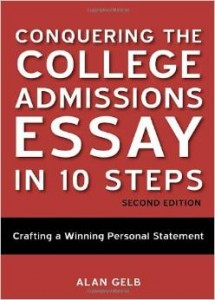
Conquering the College Admissions Essay in 10 Steps
Alan Gelb is the author of the bestselling Conquering the College Admissions Essay in 10 Steps and is all over the world on their personal statements.
He will be conducting a workshop on how to approach this daunting assignment, answering your questions and getting you started on the most important essay you’ve ever written.
Newton South High School was tops in Massachusetts in U.S. News and World Report’s 2015 Best High Schools survey. U.S. News looked at more than 29,000 public high schools in all 50 states and the District of Columbia to determine which schools excelled in each state and nationally.
The Top 10:
1. Sturgis Charter Public School
2. Boston Latin School
3. Boston Collegiate Charter School
4. Advanced Math & Science Academy Charter School
5. Lexington High School
6. Belmont High School
7. Berkshire Arts And Technology Charter Public School
8. Mystic Valley Regional Charter School
9. Dover-Sherborn Regional High
10. Sharon High School
Newton High Schools
12. Newton South High School
38. Newton North High School
To create the 2015 Best High Schools rankings, U.S. News worked with RTI International, a North Carolina-based research firm. High schools were evaluated in three stages.
First, U.S. News looked at overall student performance on state-required tests. Schools had to perform better than average to pass, but because of a slight change to the methodology this year, more schools qualified for the rankings.
Then, U.S. News factored in how effectively schools educated their least-advantaged students – those of black, Hispanic and low-income backgrounds.
Finally, schools were assessed on how well they prepared students for college based on participation in and performance on Advanced Placement and International Baccalaureate exams.