I run my moms’ book club which is mostly neighbors and the most challenging part of the job is to pick the books so I thought I’d share our picks in case you are looking for a good read, be it a light summer read or more serious stuff. We alternate. One month “beach read.” Next month “Booker Prize-ish.”
Our book club is all about socializing so reading the book before the meeting is actually optional. I am the worst culprit since I prefer children’s lit so it’s been interesting to see what books the ladies actually read. It seems to me that we are most enthusiastic about memoirs.
Here’s what we’ve been reading. How about you? What are you reading? What do you recommend?
p.s. A list of Newton Authors.
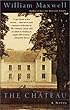
The Chateau by William Maxwell
It is 1948 and a young American couple arrive in France for a holiday, full of anticipation and enthusiasm. But the countryside and people are war-battered, and their reception at the Chateau Beaumesnil is not all the open-hearted Americans could wish for.
This book was praised for “beautiful writing” and “and interesting take on post WWII France”. A good portion of our book club read the entire book despite it being quite long with a very small font which made it seem intimidatingly dense.
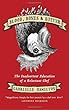
Blood, Bones and Butter: The Inadvertent Education of a Reluctant Chef by Gabrielle Hamilton
Before Gabrielle Hamilton opened her acclaimed New York restaurant Prune, she spent twenty fierce, hard-living years trying to find purpose and meaning in her life. Above all she sought family, particularly the thrill and the magnificence of the one from her childhood that, in her adult years, eluded her. Hamilton’s ease and comfort in a kitchen were instilled in her at an early age when her parents hosted grand parties, often for more than one hundred friends and neighbors. The smells of spit-roasted lamb, apple wood smoke, and rosemary garlic marinade became as necessary to her as her own skin.
Blood, Bones & Butter follows an unconventional journey through the many kitchens Hamilton has inhabited through the years: the rural kitchen of her childhood, where her adored mother stood over the six-burner with an oily wooden spoon in hand; the kitchens of France, Greece, and Turkey, where she was often fed by complete strangers and learned the essence of hospitality; the soulless catering factories that helped pay the rent; Hamilton’s own kitchen at Prune, with its many unexpected challenges; and the kitchen of her Italian mother-in-law, who serves as the link between Hamilton’s idyllic past and her own future family—the result of a difficult and prickly marriage that nonetheless yields rich and lasting dividends.
Blood, Bones & Butter is an unflinching and lyrical work. Gabrielle Hamilton’s story is told with uncommon honesty, grit, humor, and passion. By turns epic and intimate, it marks the debut of a tremendous literary talent.
“I wanted the lettuce and eggs at room temperature . . . the butter-and-sugar sandwiches we ate after school for snack . . . the marrow bones my mother made us eat as kids that I grew to crave as an adult. . . . There would be no ‘conceptual’ or ‘intellectual’ food, just the salty, sweet, starchy, brothy, crispy things that one craves when one is actually hungry. In ecstatic farewell to my years of corporate catering, we would never serve anything but a martini in a martini glass. Preferably gin.”
Chef Owner of lauded East Village restaurant Prune comes out with her first book. Even Anthony Bourdain would say that she’s the best chef writer around. It’s unflinchingly honest which is how our book club likes its memoirs and has the same “overcoming-traumatic-dysfunction-childhood-caused-by-divorce” story that we loved about Andre Dubus III’s memoir.
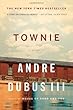
Townie: A Memoir by Andre Dubus III
Won Book of the Year Adult Non-Fiction—2012 Indie Choice Awards
Amazon Best Book of the Month February 2011
“Dubus relives, absent self-pity or blame, a life shaped by bouts of violence and flurries of tenderness.”—Vanity Fair
After their parents divorced in the 1970s, Andre Dubus III and his three siblings grew up with their overworked mother in a depressed Massachusetts mill town saturated with drugs and everyday violence. Nearby, his father, an eminent author, taught on a college campus and took the kids out on Sundays. The clash between town and gown, between the hard drinking, drugging, and fighting of “townies” and the ambitions of students debating books and ideas, couldn’t have been more stark. In this unforgettable memoir, acclaimed novelist Dubus shows us how he escaped the cycle of violence and found empathy in channeling the stories of others—bridging, in the process, the rift between his father and himself.
It was difficult for our book club to separate how much they like the author versus his book. Both get high marks. He was the Book and Author guest for the Newton Free Library fundraiser and is often accessible through other charity book events. Those that met him rave about his down-to-earth humbleness and note how handsome he is. (Sorry, he’s married!). His memoir was also widely enjoyed.
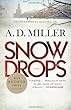
Snowdrops by Andrew Miller
SHORTLISTED for the 2011 Man Booker Prize for Fiction
A riveting story of erotic obsession, self-deception and moral free-fall, set in post-communist Moscow.
Nick Platt is a lawyer working in Moscow in the early 2000s–a city of hedonism and desperation, magical hideaways and debauched nightclubs, kindness and corruption. Nick doesn’t ask too many questions about the shady deals he works on: he’s too busy enjoying the exotic, sinful nightlife. On a sultry day in September, Nick rescues two willowy sisters, Masha and Katya, from a would-be purse snatcher, and soon the three of them are cruising Moscow’s seamy glamour spots. As winter descends on the decadent city, Nick falls for the seductive Masha, but soon finds he is falling away from himself–and at the centre of a tale of deception and betrayal, in a place where dark secrets, and long hidden corpses, come to light when the deep snows finally thaw.
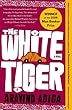
This is our next pick so we won’t meet on it until June. The person who picked this book also selected The White Tiger: A Novel by Aravind Adiga which won the Booker Prize which gives insight into modern day India’s dirty politics while wrapping a riveting story around class lines.
Snowdrops promises a peek into modern day mafia Russia. We are all pretty excited about this book.
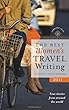
Author Visits
We had Carol Reichert of Newton visit our book club for her piece in Best Women Travel’s Writing 2011. She has a new piece in the 2012 edition so we are looking forward to booking her. If you would like to have her for your book club, please leave a comment. I will pass it on to her for you.
Since publishing A Woman’s World in 1995, Travelers’ Tales has been the recognized leader in women’s travel literature, and with the launch of the annual series The Best Travel Writing in 2004, the obvious next step was an annual collection of the best women’s travel writing of the year. This title is the seventh in an annual series—The Best Women’s Travel Writing—that presents inspiring and uplifting adventures from women who have traveled to the ends of the earth to discover new places, peoples, and facets of themselves. The common threads are a woman’s perspective and compelling storytelling to make the reader laugh, weep, wish she were there, or be glad she wasn’t.
In The Best Women’s Travel Writing 2011, readers
Have lunch with a mobster in Japan and drinks with an IRA member in Ireland
Learn the secrets of flamenco in Spain and the magic of samba in Brazil ** Carol Reichert’s Piece
Deliver a trophy for best testicles in a small town in rural Serbia
Fall in love while riding a camel through the Syrian Desert
Ski a first descent of over 5,000 feet in Northern India
Discover the joy of getting naked in South Korea
Leave it all behind to slop pigs on a farm in Ecuador…and much more.
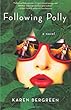
Following Polly: A Novel by Karen Bergreen
Would you call Alice Teakle a stalker? Or just someone with an, um, healthy obsession with golden girl Polly Linley Dawson? No one much notices Alice: not her boss, not the neighbors, not even her Mother.
Besides, everyone follows Polly: her business selling high-end lingerie you can imagine only her elegant self wearing, her all-over-the-social-pages marriage to movie director Humphrey Dawson, her chic looks, her wardrobe. Alice just follows her a little more….closely.
And when she loses her job and starts to follow Polly Dawson one Manhattan autumn afternoon, Alice stumbles on the object of her attention sprawled dead on the floor of a boutique. Alice is forced to become truly beneath anyone’s notice. Invisible, in fact. Because she’s accused of murder.
But can another obsession help save Alice with the fallout? Charlie is Alice’s longtime unattainable crush. He might be able to help her out of the mess she’s in…in return for a favor or two, that is. And how will Alice find out if Charlie is really the man Alice thinks he is?
We all enjoyed Karen Bergreen’s first novel. She is coming out with a new book, Perfect is Overrated, this summer and we are going to try to book her for a Skype author visit. Interested? I can ask on your behalf. She’s a friend from college. Expect her books to be funny. Before she had kids, she was a stand up comedian.
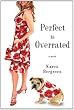
Perfect is Overrated
What the best cure for post-partum depression? After years of barely moving, Kate springs back to life when the mothers-youlove- to-hate in her daughter’s preschool begin to turn up dead. Murder as a cure for sadness? Sounds evil, but it’s not. In Perfect Is Overrated, stand-up comedian and author of Following Polly Karen Bergreen presents a lovable heroine who is so at sea she’s still not sure whether what she suffers has to do with the birth of her little girl or with the fact that her handsome hunk of a detective husband doesn’t live with her anymore. She might fall back in love, she might find a killer, but she sure won’t be spending all day in bed anymore.
Sometimes I Feel Like a Nut: Essays and Observations by Jill Kargman
Demonstrating Woody Allen’s magical math equation, comedy = tragedy + time, a sensational collection of witty essays about life, love, hate, kids, work, school, and more from the author of The Ex-Mrs. Hedgefund and Arm Candy
Jill Kargman is a mother, wife, and writer living the life in New York City . . . a life that includes camping out in a one-bedroom apartment with some unfortunate (and furry) roommates, battling the Momzillas of Manhattan, and coming to terms with her desire for gay men. In this entertaining collection of observations, Kargman offers her unique, wickedly funny perspective as she zips around Manhattan with three kids in tow.
Kargman tackles issues big and small with sharp wit and laugh-out-loud humor: her love of the smell of gasoline, her new names for nail polishes, her adventures in New York City real estate, and her fear of mimes, clowns, and other haunting things. Whether it’s surviving a family road trip or why she can’t stand Cirque du So Lame, living with a mommy vagina the size of the Holland Tunnel or surviving the hell that was her first job out of college, Kargman’s nutty self triumphs, thanks to a wonderfully wise outlook and sense of fun that makes the best of everything that gets thrown her way. And if that’s not enough, Kargman illustrates her reflections with doodles that capture her refreshing voice.
We read her light and funny memoir but had a hard time keeping up. We are just not hip enough for the NYC 30 something Mommy lingo. Still, it was a fun read. It just made us feel old.
The Rock Star in Seat 3A: A Novel by Jill Kargman
It’s Hazel’s thirtieth birthday and she has everything she’s ever wanted: a kickass job, a dream apartment in New York City, and the perfect boyfriend—who’s just days away from proposing. Hazel thinks she’s happy but isn’t quite ready to settle down. So when her most far-fetched fantasy enters the realm of the possible, shouldn’t she drop everything to see it through?
The morning after her birthday, Hazel boards a flight to L.A. only to get the surprise of her life. When she’s bumped up to first class, extra legroom and free drinks are absolutely the last things on her mind when she catches sight of her seatmate: her all-time biggest celebrity crush, rock star Finn Schiller! Only the night before she’d confessed her infatuation with the gorgeous musician, and her boyfriend joked that she had a free pass if she ever met him. Hazel can’t believe fate has actually thrown them together.
Even more unbelievable is that during the flight they genuinely connect. Finn likes her uncensored cursing and wicked sense of humor, and that she’s unlike all of his groupies; Hazel likes his killer looks, ripped physique, and soulful music. But what started as a fantasy quickly becomes a real attraction, and after a dream date and taste of the rock-star life with Finn in L.A., Hazel is forced to examine the track her life is on. Indulging in a passionate affair with a rock star seems crazy—but could she ever forgive herself if she walked away from her wildest dream coming true? And is her wildest dream the stuff that happiness is made of?
A lively novel about a down-to-earth New York City girl who suddenly finds herself in a rock ‘n’ roll Cinderella fantasy, The Rock Star in Seat 3A is seasoned with Jill Kargman’s signature wit and hilarious dialogue. This is a fairy-tale romance with a twist.
One of our book club members is friends with Jill Kargman so we are hoping to Skype her in for an author visit. Are you interested too? Just leave a comment and we’ll try to hook you up.
The Good Mother : A Novel by Sue Miller
Anna is a divorcee, a piano teacher, and a devoted mother. She was brought up in a family which valued achievement and self-discipline above almost everything else, but what Anna has always longed for is to be more passionate and expressive, both in her music and in her life, than she seems capable of being. Then she falls in love with Leo, an artist, and in many ways the kind of wild, impulsive person Anna has always wanted to be. Their relationship is intensely sexual and it is this, ultimately, which threatens to destroy all that Anna holds dear.
We are booking Sue Miller for an author visit this fall and we are REALLY excited. Her book was an Oprah pick. Our connection to Sue Miller is a friend-of-a-friend so we lack clout to get her for you. Still, if you want her for your book club, leave a comment and we can pass that along. She does live near Newton …
To purchase any book at Amazon, please click on image of book.