Foraging for edible plants and berries is not the first thing that comes to mind when you live in a suburban city like Newton. Yet, the foraging is abundant at schoolyards, dog parks, and soccer fields. At least, that is where I found all these specimens. I don’t know too much about mushrooms and would strongly recommend AGAINST gathering wild mushrooms unless you are an expert. I only include the mushrooms-on-tree photos for their dramatic beauty.
I am an amateur and I read the books below then found plants I thought looked familiar while walking my dog at dog parks and at soccer fields. I took pictures with my iPhone thinking that it would be easier to identify rather than lugging around 4 books. I still am not sure of some of these plants. Looks like I need to take more photos!
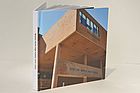
These were the books that I used to identify the plants. I am a beginner so again I would caution against eating items found in the wild without positive identification! If you know about any of the plants below or other edible plants found in Newton, please help me out with a comment. Thank you!
p.s. It was this article in Savuer Magazine that got me interested in foraging. The author, Ava Chin, uses foraging as a way of coping with grief. What a wonderfully positive way to remember her grandmother! The plants below were collected by Ava from Brooklyn’s Prospect Park. These plants grow in Newton too! I will add more photos to this post as I find more plants.

These are the plants that I found in Newton:
 This was growing in Cold Spring Park in Newton Highlands near the dog park. This could be Chicken of Woods but I am not sure. It is, however, growing off the side of a tree.
 This is growing at Cold Spring Park in the off-leash dog park. I think it’s a Serviceberry. The berries resemble long-stemmed blueberries.

This Echinacea plant is growing in front of Peirce Elementary School. It’s a common flower grown in gardens. Some species are used in herbal medicines and some are cultivated in gardens for their showy flowers.
 My dog ate these berries when he was a puppy playing at the dog park at Cold Spring Park. I realize now that it is Smooth Sumac berries that the Native Americans used to make a refreshing drink.
 I think this is Pokeweed. The young shoots and leafy tips can be cooked as a kind of asparagus-like vegetable. The root, seeds, and mature stems and leaves are dangerously POISONOUS!! I’d stay away from this one!

This was also growing at Cold Spring. I think it’s a Chokeberry. I wish I had a better shot of the leaves to be sure.
From Libby Shaw: The berries on the plant your article tentatively identifies as chokeberry look to me like the fruits of a stubbornly invasive vine called porcelain berry. I know of no other plant that has fruits with that range of colors. The berries reportedly are edible.
Quoting https://askinglot.com/are-porcelain-berries-edible: “For those of you who enjoy bland food with a slightly prickly aftertaste, they would make the ideal snack food, especially if you also enjoy a slimy texture.”
From Libby Shaw: “If you see wild berries that are *bluish-black* [emphasis added] and each of them has a 5-point crown on it, there is a 90 percent chance that what you are seeing are wild blueberries.” (Source: https://plantedshack.com/6-berries-that-look-like-blueberries)

Wild grape leaves were growing at Cold Spring at the off-leash dog park. Libby Park says, “I saw your list includes wild grapes. When they’re good and ripe (dark purple), wild grapes make for an entertaining nibble, if your palate enjoys sour. They make delicious grape juice (I recently made a batch) — but it requires a LOT of sugar, so it’s probably better to grow domestic grapes if you’re working on controlling your family’s sugar intake.”
 These Milkweed pods growing in front of Peirce Elementary School will soon release the seeds that float in the wind. When the pods are very young, they are edible as a cooked vegetable.
 The Pineapple Weed that I found at Cold Spring resembles Chamomile, a relative which is used to make tea. Pineapple Weed can also be used for colds and to aid relaxation. It’s has a pineapple scent and a slight pineapple flavor.

 These are Crabapple trees. The first one is at Cold Spring in the off-leash dog park. The other tree with abundant fruit is at Weeks Field. The crabapples are sour (my kids and I tried them) but they are supposed to be great cooked as applesauce.
 Juniper berries (the same ones found in the spice aisle) were growing at Weeks Field along the perimeter.
 I think this is Chickory. It’s growing in front of Peirce Elementary School. It’s used as a field green and the root can be roasted and used as a substitute for coffee.
I see Yew berries everywhere in Newton front yards since Yew is commonly used as hedging. The berry is edible but the seed is poisonous. This picture was taken in Newton Centre in the main garden area near the parking lots.
From Libby Shaw: The seeds of yew berries are not simply poisonous, they are highly toxic and can kill a child. No one should be encouraged to eat yew berries, lest they ingest seeds by mistake. See https://pubmed.ncbi.nlm.nih.gov/29363354/
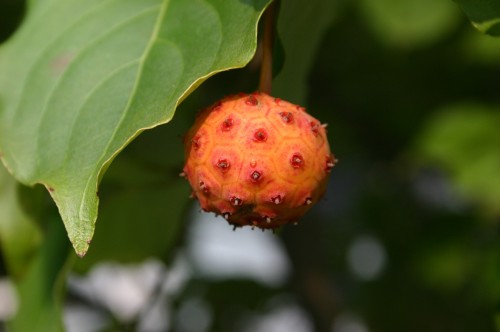
 The Kousa Dogwood has edible fruits and is a common ornamental tree. I found one at Hamilton Field but also at a friend’s front yard.
 I thought this was a Bunchberry but upon closer inspection, it is not. There are lots of poisonous red berries so please do not eat any until you have made a positive identification, preferably consulting an expert!
I found this on Washington Blvd. at Warren Park near the tennis courts closer to Myrtle Street. I think this is Bunchberry.

To examine any book more closely at Amazon, please click on image of book.
As an Amazon Associate, I earn from qualifying purchases.