College Scholarship Worth $1000 for Current College Students
Two $1000 scholarships are being offered by Art Metal Workshop to two students enrolled in fall/spring school year of 2013/2014 at any college, university, trade or technical school within the United States or Canada (no fees to apply, free for all students).
Interested participants must meet the following criteria:
Eligibility is for any student currently enrolled in the school year of 2013/2014 at any college, university, trade or technical school within the United States or Canada. Students must maintain a cumulative Grade Point Average of at least 3.0 (or the equivalent).
Students must be 16 years or older at the time of enrollment.
Must be a Canadian/American citizen or hold a valid student visa.
Winning participants will be required to submit a photo for promotional purposes.
Eligible students must submit an essay written around one of the two following questions:
The modern use of wrought iron metals in residential construction?
The evolution of wrought iron processing/use through 19th – 20th century.
To apply email or mail your application along with an essay:
Now recruiting girls entering the 7th and 8th grade this summer.
Education drives change.Through the introduction of leadership, entrepreneurship and personal development skills, young girls are empwered to discover new career opportunities.
Hosted by WomenUp and The Network for Teaching Entrepreneurship (NFTE) and sponsored by Care.com, Girl Empower:
The NFTE Summer BizCamp Experience, is a two-week, intensive camp designed to each young women about personal discovery, leadership, entrepreneurship and teamwork.
Program Schedule
Dates: July 8-19, 2013
Monday-Friday sessions meet 9:00 AM- 5:00 PM
Location: Boston Metro Area, specific location details will be sent to you with the acceptance letter.
Eligibility Requirements
Young women who will enter 7th or 8th grades in the 2013-2014 school year are eligible to apply.
Costs & Scholarships
Girl Empower: The NFTE Summer BizCamp Experience is a FREE program based on a competitive application process.
Application Process and Requirements
Only complete applications will be reviewed. Applicants will be chosen based on complete well-thought answers to short answer and essay questions and include the following: community involvement, demonstrated interest in entrepreneurship or related fields and ability to overcome challenges.There is a limited amount of space for this program, so please take your time and thoroughly review the application. The application consists of:
Application Form (required) | Complete an Online Applicationor Download the Application
Short-Answer Questions (required)
Essay (required)
Recommendation (optional but highly preferred)
Upon receiving your application materials, your application will be carefully reviewed. Students will be notified of their application status within one month of the application deadline.
The Auburndale Community Charitable Foundation will award the following scholarships, to be applied toward tuition, room and board or supplies at a college of the recipient’s choice:
A. Two $10,000 scholarships. These scholarships will be awarded to graduating high school students who have demonstrated active involvement in community and/or charitable causes, in a leadership capacity. In addition, the students’ academic achievement, essay, and recommendations will be considered.
B. Fifteen $2,000 scholarships. These scholarships will be awarded to graduating high school students based upon academic achievement, essay, and recommendations. Active involvement in community and/or charitable causes will be considered.
The student or an immediate family member must have been a customer of The Village Bank since at least January 1, 2012. Eligible applicants who are Newton or Wayland residents will be considered in both award categories. Eligible applicants who do not reside in Newton or Wayland will be considered for the $2,000 awards.
The $10,000 scholarships will be awarded over four years, upon successful completion of the first semester of each of four succeeding academic years. The one-time $2,000 scholarships will be awarded upon successful completion of the first college semester.
REQUIREMENTS:
1. The applicant must fulfill high school graduation requirements by June 2013.
2. The applicant must intend to pursue studies at an accredited college or university.
3. The applicant must be willing to have his/her name, photo, and town/city appear in promotional announcements by the Bank.
4. The application must be submitted to the Auburndale Community Charitable Foundation prior to April 12, 2013.
Cambridge Savings Bank recently concluded its CSBsmart Financial Education Program at Newton North and South High Schools. The program taught students critically important financial skills through a four-lesson curriculum focusing on budgeting, saving, managing a checking account, credit smarts, and fraud awareness.
Here are some examples:
1. “Lunchtime Loan” – uses a student-acted role-play to teach the concept of “creditworthiness.”
2. “My Credit Score – Help or Hurt?” – allows all students to vote on whether specific situations would help or hurt one’s credit score.
3. “Red Flag Alert” – helps students develop a keen sensitivity to the many red flags of fraud.
The success of the program is based on student’s retention of the financial information presented. Thanks to the program, students were able to answer 75 percent of financial questions correctly on a post-session evaluation. This compares favorably to a pre-session average score of 46 percent.
Since 2010, Cambridge Savings Bank has educated over 7,000 participants with live financial lessons. In addition, the bank provides its communities with online financial education resources through the CSBsmart section of its website.
We are lucky to have such great businesses partnering with our schools! Thank you Cambridge Savings Bank!
McVittie Financial Advisors is looking for an office manager.
Candidates must be:
Client focused – understand and consider individual client situations when interacting with clients, responding to inquiries, setting work priorities and completing tasks.
Process oriented – follow and improve established procedures to manage the wide-ranging flow of information and materials that come into our office; be able to identify the information and required follow up.
Self-starting – take the initiative to solve problems, identify actions required and complete necessary tasks.
Organized – able to handle multiple tasks and projects simultaneously, and to manage client related materials and communications
Professional demeanor – pleasant, personable and professional in all interactions.
Excellent communicators – effective verbal and written communication skills including good spelling ability.
Computer skilled – with Microsoft Office, willing to master industry-specific software and able to provide clear answers to client questions about technology.
Compliance aware – sensitive to the regulatory and compliance requirements of the financial services industry and Massachusetts.
Industry knowledge – an understanding of the financial industry, particularly the regulatory environment, is a plus.
This is a part time position with flexible hours located in the Auburndale section of Newton near the Riverside T Station.
Please contact Elizabeth McVittie at office@mcvittiefinancial.com for more information or to submit your application and salary expectations.
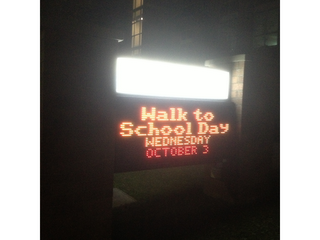
Students across the country celebrated International Walk to School and Bike to school day earlier this month, including students (in Newton or here at F.A. Day Middle School). Thousands of students reaped the numerous health and environmental benefits that walking, biking or riding the bus to school provides. Walking or biking to school shouldn’t just be a once a year activity though. We’re lucky in Newton that most students live close enough to walk, bike or ride a bus to school every day. Read on to learn why a car-free commute to school is a healthy way to start your day, and tips for getting going!
Regular physical activity, including walking to school, provides the following benefits according to the Centers for Disease Control and Prevention:
Builds and maintains healthy bones, muscles, and joints.
Helps control weight, build lean muscle and reduce fat.
Improves sense of self-image and autonomy.
Fosters healthy social and emotional development.
More students walking, biking or taking the bus helps reduce car congestion around the school, and reduce the environmental impact cars make.
Even students who take the bus benefit from walking to and from the bus stop, and the sense of independence created by getting to school on their own.
Students who walk and bike to school learn the rules of the road, which can help make them better pedestrians and drivers as they get older and get to school on their own.
Even for parents who are planning to drive to work, walking to school can be quicker than dealing with car congestion around the school building. Or if you must drive, consider dropping students off a few blocks before the school and allowing them to walk the rest of the way.
It’s possible to walk year round, even in New England. Break out those snow boots, hats, gloves, galoshes and rain/winter coats when the weather forecast calls for them.
If you’re not sure where to begin, consider making a dry run on a weekend when there isn’t pressure to be on time. Practice the route with your child so s/he knows where to go.
Safety first! Always wear a helmet when bicycling, riding a scooter, or anything else with wheels.
An important note about idling:
The Massachusetts school idling regulation prohibits motor vehicle idling within 100 feet of school grounds. The fine is $100 for a first offense, and $500 for each subsequent offense.According to the U.S. Environmental Protection Agency, “Idling vehicles contribute to air pollution and emit air toxins, which are pollutants known or suspected to cause cancer or other serious health effects. Monitoring at schools has shown elevated levels of benzene, formaldehyde, acetaldehyde and other air toxics during the afternoon hour coinciding with parents picking up their children. Children’s lungs are still developing, and when they are exposed to elevated levels of these pollutants, children have an increased risk of developing asthma, respiratory problems and other adverse health effects. Limiting a vehicle’s idling time can dramatically reduce these pollutants and children’s exposure to them.”
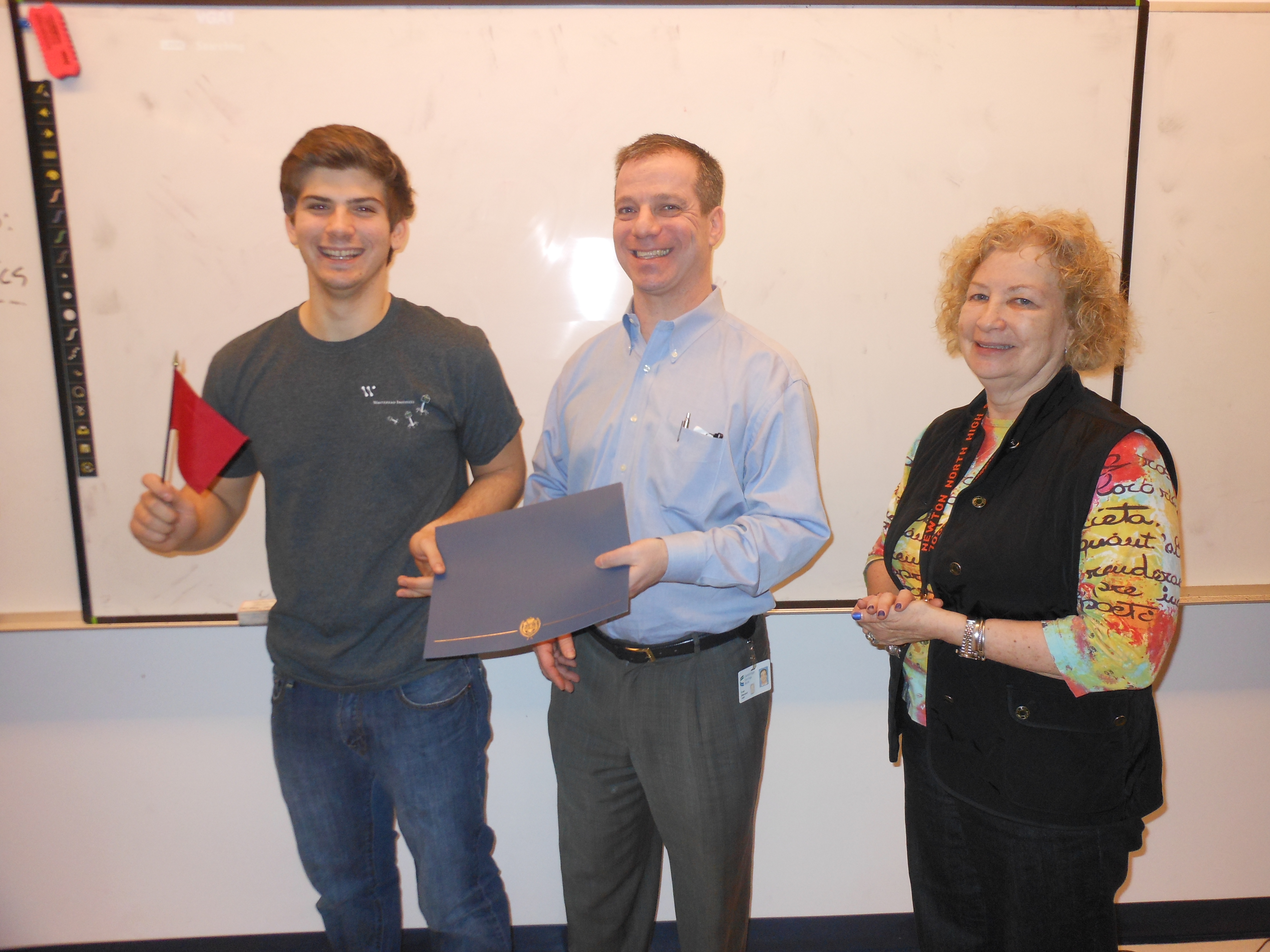
Newton North High School student Ari Appel encourages classmates to Bike to School. His incentive? FOOD! Bike2School, Eat for Free is a program that involves the Newtonville business community as well! Every five times you bike to school, you’ll get five bucks to grab a bite at Newtonville stores.
Here’s how it works:
Now there’s one more benefit of riding your bike to school. Get a card, and present it (along with your bike) to a bike2school official outside the theatre entrance between 7:15 and 7:45am on a school day. You’ll receive one stamp on your card. After you’ve collected five stamps, your card will be worth five bucks at Newtonville stores that support bike2school.
Just look for the “bike2school supported here” sticker in their window. Then, grab another card, and bike your way to great health, a clean environment, and another free meal.
Where to find a card: Cards can be found next to bike2school posters, at some stores that support bike2school, with a bike2school official during stamping time at the theatre entrance between 7:15 and 7:45am on schooldays, and at other locations in school.Only students, faculty, and staff of NNHS are eligible. Card expires 14 days from date stamped on card. Card may only be redeemed at participating locations. One card per purchase. Card may only be used on one item per purchase. Any remaining value does not apply to additional items or additional future purchases. Partially filled cards may not be combined. Card is void if hole-punched or otherwise tampered with. Not redeemable for cash. Terms are subject to change without notice.
Ari’s Newtonville Bike2School Facebook page has more information. He’s also featured in The Newtonite.
What do NPR host Tom Ashbrook, Boston Globe Film Critic Ty Burr, novelist and author Anita Diamant, and Defending Jacob author William Landay have in common? All four writers and journalists are Newton residents, and all will headline the second annual Newton Inspires—An Evening of Ideas and Community, sponsored by the Newton Schools Foundation (NSF).
The free community event will take place :
November 14, 7-9:30 p.m.
at Newton South High School
140 Brandeis Road in Newton Centre
Leaders representing an array of fields and interest areas will address topics ranging from business, education, science and medicine, journalism and the environment, to sports, literature, arts and entertainment. Participants choose three 30-minute speaker sessions from among 18 speakers. At the end of the evening, participants and speakers gather to reconnect over coffee and dessert.
The event is free and open to the public and speaker sessions fill up quickly, so early registration is recommended. To view the full list of speakers, to register or for additional information go to www.NewtonSchoolsFoundation.org., or call 617-559-6120.
Kenneth C. Brennan, president and CEO of The Village Bank, announced today that the Bank’s Auburndale Community Charitable Foundation has awarded a total of $46,000 in college scholarships to fifteen 2012 graduating high school seniors from Newton and Wayland.
The Bank’s total investment in education since the program began in 1988 now totals $396,000.
$10,000 Awards Two of the 2012 recipients received scholarships in the amount of $10,000, with $2,500 to be awarded at the successful completion of each of the student’s four college years. The students are Kenya Heard, Wayland High School, and Kevin Wu, Newton North High School.
Candidates for the $10,000 awards were required to have demonstrated active involvement in local community and/or charitable causes.
“The Village Bank has always had a strong commitment to the community,” said Brennan. “The special $10,000 scholarships give us the opportunity to recognize local students who share that commitment.”
$2,000 Awards One-time $2,000 scholarships were awarded to 13 graduating students from Newton and Wayland. They are:
Newton North High School – Madeleine Aquilina, Paige Grody, Lydia O’Connor, Emily Paley, Matias Page, Sarah Perlo, Alexandra Pini, and Stephanie Vitone.
Newton South High School – Emma Loeb and Saewon Park.
Wayland High School – Erik Halperin, Briana Mele, and Kayla Rice.
The Auburndale Community Charitable Foundation scholarships are funded in part by the Bank’s Annual Golf Classic at Woodland Golf Club. The success of the 2011 Classic allowed the Bank to expand its scholarship commitment again this year, said Brennan.
Energy is in everything. We use energy for everything we do, from making a jump shot to baking cookies to sending astronauts into space.
There are two types of energy:
Stored (potential) energy
Working (kinetic) energy
There is a great iPad/iPhone/iPod Touch app to design roller coasters that shows this.
Coaster Physics. Design your own roller coaster and watch the potential energy convert to kinetic energy as you ride your roller coaster. $.99. My first grader plays this all the time! Click on icon to view at iTunes.
For example, the food you eat contains chemical energy, and your body stores this energy until you use it when you work or play.
Energy Sources Can be Categorized As Renewable or Nonrenewable
When we use electricity in our home, the electrical power was probably generated by burning coal, by a nuclear reaction, or by a hydroelectric plant at a dam. Therefore, coal, nuclear and hydro are called energy sources. When we fill up a gas tank, the source might be petroleum or ethanol made by growing and processing corn.
Energy sources are divided into two groups — renewable (an energy source that can be easily replenished) and nonrenewable (an energy source that we are using up and cannot recreate). Renewable and nonrenewable energy sources can be used to produce secondary energy sources including electricity and hydrogen.
Solar energy from the sun, which can be turned into electricity and heat
Wind
Geothermal energy from heat inside the Earth
Biomass from plants, which includes firewood from trees, ethanol from corn, and biodiesel from vegetable oil
Hydropower from hydroturbines at a dam
Nonrenewable Energy
We get most of our energy from nonrenewable energy sources, which include the fossil fuels — oil, natural gas, and coal. They’re called fossil fuels because they were formed over millions and millions of years by the action of heat from the Earth’s core and pressure from rock and soil on the remains (or “fossils”) of dead plants and creatures like microscopic diatoms. Another nonrenewable energy source is the element uranium, whose atoms we split (through a process called nuclear fission) to create heat and ultimately electricity.
We use renewable and nonrenewable energy sources to generate the electricity we need for our homes, businesses, schools, and factories. Electricity “energizes” our computers, lights, refrigerators, washing machines, and air conditioners, to name only a few uses.
Most of the gasoline used in our cars and motorcycles and the diesel fuel used in our trucks are made from petroleum oil, a nonrenewable resource. Natural gas, used to heat homes, dry clothes, and cook food, is nonrenewable. The propane that fuels our outdoor grills is made from oil and natural gas, both nonrenewable.
The chart above shows what energy sources the United States used in 2010. Nonrenewable energy sources accounted for 92% of all energy used in the Nation. Biomass, the largest renewable source, accounted for over half of all renewable energy and 4% of total energy consumption.
————————-
What is light?
This is from Optical Resources.
What is light?
It’s a kind of energy called “electromagnetic (EM) radiation” (but this kind of radiation is not harmful, except for an occasional sunburn). There are other kinds of EM radiation too (radio waves, microwaves, x-rays, etc.), but light is the part WE can see, the part that makes the rainbow.
How does light travel?
FAST and STRAIGHT.
How FAST?
About 186,000 miles per second [300,000 kilometers per second], so light from the sun takes about 8 minutes to go 93 million miles [149 million kilometers] to earth. Does this seem SLOW? Well, if you could DRIVE to the sun at 60 mph [100 kph], it would take you 177 years to get there! In one second, light can go around the earth 7 times!
How STRAIGHT?
Perfectly straight, until something bends it. The straight paths of light are called LIGHT RAYS.
How are shadows formed?
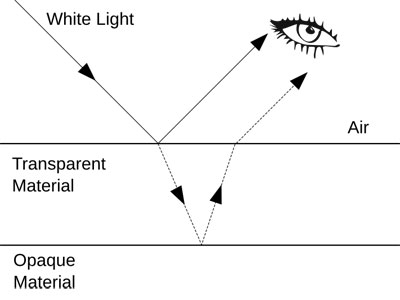
When light strikes an object, some light reflects (based on the colour of the object). when there is an obstacle in the way of the light, and it cannot pass, there is no light to reflect, and thus a shadow is formed.
A SHADOW IS FORMED WHEN LIGHT SHINES AT AN OPAQUE OBJECT BLOCKING THE LIGHT RAY CAUSING A SHADOW BECAUSE LIGHT ONLY GOES IN A STRAIGHT LINE.
Vocabulary
These are the terms for the 4th Grade Test
translucent versus transparent versus opaque:
a transparent object is one that lets light pass through (clear window)
a translucent object lets some light go through but not all (bathroom window)
opaque: light can not go through it. Impenetrable by light; neither transparent nor translucent.
an opaque object lets no light pass through (a table)
absorption: The term absorption refers to the physical process of absorbing light. The process in which incident radiated energy is retained without reflection or transmission on passing through a medium. For example, light can not go through an object that is opaque because that object absorbs the light.
The phenomenon of a light beam rebounding after hitting a surface is called reflection. To put it simply, the mirror images are what are called reflection generally. However in the case of refraction, these angles are not the same. Different media participate in refraction, thus making this angle unequal. Reflection is found in mirrors while lenses use refraction.
light energy: energy transferred by radiation, especially by an electromagnetic wave. It’s a kind of energy called “electromagnetic (EM) radiation” (but this kind of radiation is not harmful, except for an occasional sunburn). There are other kinds of EM radiation too (radio waves, microwaves, x-rays, etc.), but light is the part WE can see, the part that makes the rainbow.
When a light wave with a single frequency strikes an object, a number of things could happen. The light wave could be absorbed by the object, in which case its energy is converted to heat. The light wave could be reflected by the object. And the light wave could be transmitted by the object.
sound energy: Sound is a type of energy made by vibrations. When any object vibrates, it causes movement in the air particles. These particles bump into the particles close to them, which makes them vibrate too causing them to bump into more air particles. This movement, called sound waves, keeps going until they run out of energy. If your ear is within range of the vibrations, you hear the sound.
pitch: pitch is the frequency at which an object vibrates to create a sound. A tuning fork, for example, that vibrates 440 times a second will produce a perfect “A” note. It is these predetermined levels of frequencies that pitch is categorized into the twelve chromatic musical tones.
vibrate: move back and forth rapidly.
Did you hear that sound? It was made by air vibrating. The same is true for sounds made by musical instruments. The difference between NOISE and MUSIC is that musical sounds are organized into patterns that have pitch and rhythm. Noise is just random, disorganized sounds. Sounds are made and travel in the same way whether they are musical sounds or noise.
A musical sound is called a tone, and is produced by air vibrating a certain number of times per second. These vibrations are called waves.
What is sound? Sound is a form of energy, just like electricity and light. Sound is made when air molecules vibrate and move in a pattern called waves, or sound waves. Think of when you clap your hands, or when you slam the car door shut. That action produces soundwaves, which travel to your ears and then to your brain, which says, “I recognize that sound.”
Sound is a type of energy made by vibrations. When any object vibrates, it causes movement in the air particles. These particles bump into the particles close to them, which makes them vibrate too causing them to bump into more air particles. This movement, called sound waves, keeps going until they run out of energy. If your ear is within range of the vibrations, you hear the sound.
Picture a stone thrown into a still body of water. The rings of waves expand indefinitely. The same is true with sound. Irregular repeating sound waves create noise, while regular repeating waves produce musical notes.
When the vibrations are fast, you hear a high note. When the vibrations are slow, it creates a low note. The sound waves in the diagram show the different frequencies for high and low notes.
Low frequency notes
High frequency notes
How do Wind Instruments make sound?
In wind instruments, like the flute and trumpet, vibrating air makes the sound. The air particles move back and forth creating sound waves. Blowing across a flute’s blow hole sets up Slinky-like waves in the tube. In the clarinet, a vibrating reed (a thin piece of wood set in the mouthpiece) gets the waves started. Different pitches are played by pressing keys that open or close holes in the tube making the air column inside the tube longer or shorter. Longer air columns produce lower pitches.
How do String Instruments make sound?
Stringed instruments are played by pressing the fingers down on the strings. This pressure changes the strings’ length, causing them to vibrate at different frequencies and making different sounds. Shortening a string makes it sound higher. Strings produce different sounds depending on their thickness.
Energy makes change possible. We use it to do things for us. It moves cars along the road and boats over the water. It bakes a cake in the oven and keeps ice frozen in the freezer. It plays our favorite songs on the radio and lights our homes. Energy is needed for our bodies to grow and it allows our minds to think.
Scientists define energy as the ability to do work. Modern civilization is possible because we have learned how to change energy from one form to another and use it to do work for us and to live more comfortably.
Forms of Energy
Energy is found in different forms including light, heat, chemical, and motion. There are many forms of energy, but they can all be put into two categories: potential and kinetic.
Potential Energy
Potential energy is stored energy and the energy of position — gravitational energy. There are several forms of potential energy.
Kinetic Energy
Kinetic energy is motion — of waves, electrons, atoms, molecules, substances, and objects.
Chemical Energy is energy stored in the bonds of atoms and molecules. Batteries, biomass, petroleum, natural gas, and coal are examples of stored chemical energy. Chemical energy is converted to thermal energy when we burn wood in a fireplace or burn gasoline in a car’s engine.Mechanical Energy is energy stored in objects by tension. Compressed springs and stretched rubber bands are examples of stored mechanical energy.Nuclear Energy is energy stored in the nucleus of an atom — the energy that holds the nucleus together. Very large amounts of energy can be released when the nuclei are combined or split apart. Nuclear power plants split the nuclei of uranium atoms in a process called fission. The sun combines the nuclei of hydrogen atoms in a process called fusion.Gravitational Energy is energy stored in an object’s height. The higher and heavier the object, the more gravitational energy is stored. When you ride a bicycle down a steep hill and pick up speed, the gravitational energy is being converted to motion energy. Hydropower is another example of gravitational energy, where the dam “piles” up water from a river into a reservoir.
Radiant Energy is electromagnetic energy that travels in transverse waves. Radiant energy includes visible light, x-rays, gamma rays and radio waves. Light is one type of radiant energy. Sunshine is radiant energy, which provides the fuel and warmth that make life on Earth possible.Thermal Energy, or heat, is the vibration and movement of the atoms and molecules within substances. As an object is heated up, its atoms and molecules move and collide faster. Geothermal energy is the thermal energy in the Earth.Motion Energy is energy stored in the movement of objects. The faster they move, the more energyis stored. It takes energy to get an object moving, and energy is released when an object slows down. Wind is an example of motion energy. A dramatic example of motion is a car crash, when the car comes to a total stop and releases all its motion energy at once in an uncontrolled instant.Sound is the movement of energy through substances in longitudinal (compression/rarefaction) waves. Sound is produced when a force causes an object or substance to vibrate — the energy is transferred through the substance in a wave. Typically, the energy in sound is far less than other forms of energy.Electrical Energy is delivered by tiny charged particles called electrons, typically moving through a wire. Lightning is an example of electrical energy in nature, so powerful that it is not confined to a wire.